Krakow Travel Guide
Your complete guide to exploring Krakow - districts, attractions, practical tips, and an interactive map.
In brief
- 800+ years of history
- Over 14 million tourists annually
- UNESCO World Heritage since 1978
- Largest medieval market square in Europe
What to see in Krakow and how many days you need
Krakow is one of the few major European cities that came through World War II with its historic centre intact. The entire Old Town holds UNESCO World Heritage status, granted in 1978 as one of the very first sites on the list. Over 14 million visitors come here each year for 800 years of layered architecture, a serious food scene, and quick access to sites like Auschwitz-Birkenau and the Wieliczka Salt Mine.
The city is compact and walkable. You can cross the Old Town on foot in 15 minutes, but most people stay for days - there is that much to see. This guide breaks Krakow down district by district, lists the top sights, gives you ready-made itineraries for 1, 2 or 3 days, and covers the practical details: transport, food, costs, and day trip options.
Krakow Quick Facts
Essential information to help you plan your trip
Good to know
See all tipsBest time to visit
May to September is peak season. June and September are ideal: warm, less crowded.
Transport
Old Town is fully walkable. Trams cover the city. Airport train takes 20 minutes.
Local flavors
Pierogi, zapiekanka, obwarzanek and oscypek. A milk bar meal costs only 15-30 PLN.
Prices
A meal costs 30-50 PLN, beer 14-22 PLN, coffee 12-20 PLN. 1 EUR is about 4.3 PLN.
Safety
Krakow is generally considered a safe city. Normal precautions in crowded areas.
Interactive Map
Explore Krakow's key attractions, meeting points, and districts
Top places
Districts of Krakow
Each district tells a different chapter of Krakow's story
Stare Miasto (Old Town)
The royal heart of Krakow - Main Market Square, St. Mary's Basilica, Wawel Castle, and centuries of history around every corner.
Kazimierz (Jewish Quarter)
Krakow's cultural heart - historic synagogues, vibrant street art, trendy cafes, and a nightlife scene that rivals any European city.
Podgórze (Ghetto District)
A poignant district across the river - Schindler's Factory, Ghetto Heroes Square, and memorials telling the story of WWII Krakow.
Nowa Huta
Built as a model socialist city in the 1950s. Soviet-era architecture, Cold War history, and an authentic side of Krakow most tourists miss.
Where to stay in Krakow
Four areas we send guests to, with the honest trade-offs.
The Old Town puts you steps from the Rynek but in July and August the bars around it run loud until 3am, so ask for a courtyard room. Kazimierz is the food and nightlife heart and feels more lived-in, Podgórze across the river is quieter and cheaper, and the streets right by Kraków Główny suit anyone catching an early train to Auschwitz or Zakopane. Pick by what your trip actually looks like, not just the map.
Old Town (Stare Miasto)
Inside the Planty park ring you walk to St Mary's Basilica, the Cloth Hall and Wawel in minutes. The catch is summer noise, so book a room off the street or facing an inner courtyard.
Kazimierz
The old Jewish quarter has the city's best eating, from zapiekanki at Plac Nowy to the wine bars on Józefa and Meiselsa, and it is a ten minute walk to the Rynek. If you sleep lightly, stay a street or two back from Plac Nowy.
Podgórze
Cross the Father Bernatek footbridge and prices drop while the pace slows down. You are next to the Schindler Factory and the MOCAK modern art museum, and the tram or a fifteen minute walk puts you back in Kazimierz.
Near Kraków Główny station
The station sits behind the Galeria Krakowska mall on the north edge of the Old Town, so the train from the airport and the morning buses to Wieliczka and Zakopane are right there. Handy and central, though the blocks by Pawia are more functional than pretty.
Recommended places
Hand-picked attractions
Main Market Square
Heart of the Old Town, surrounded by cafes
Wawel Royal Castle
Royal residence over the Vistula
Kazimierz district
Synagogues, street art and best bars
St. Mary's Basilica
Gothic masterpiece with hourly trumpet call
Krakus Mound
Best free panorama of the entire city
Top Attractions
Must-see places during your visit to Krakow
Wawel Castle
Royal residence for centuries, perched on a hill above the Vistula river.
St. Mary's Basilica
Gothic masterpiece on the Main Square with the famous trumpet call every hour.
Wieliczka Salt Mine
Underground UNESCO wonder with chapels carved entirely from salt.
Kazimierz
Historic Jewish quarter, now the trendiest neighborhood with cafes and galleries.
Krakow itinerary: 1, 2 or 3 days
Ready-made plans for 1, 2 or 3 days - adjust to your pace
Old Town Highlights
Start at Wawel Castle - walk through the Royal Chambers and visit the Cathedral where Polish kings were crowned. Head down to the river for a view of the castle from below.
Walk up Grodzka street to the Main Market Square. Go inside St. Mary's Basilica (listen for the trumpet call on the hour). Browse the Cloth Hall for local crafts. Lunch at a milk bar - try "bar mleczny" near the square for cheap, authentic Polish food.
Cross to Kazimierz for dinner. Plac Nowy has the best zapiekanka in town (half-baguette with toppings, a Krakow street food staple). The area around Szeroka and Józefa streets has dozens of bars and restaurants.
City plus Wieliczka or Auschwitz
Follow the 1-day plan above. In the afternoon, add the Rynek Underground Museum beneath the Main Square - a modern exhibition built around medieval market stalls discovered during renovations.
Morning trip to Wieliczka Salt Mine (30 min from the centre, 2-3 hours underground) or a full-day visit to Auschwitz-Birkenau. If you chose Wieliczka, spend the afternoon in Kazimierz: Schindler's Factory museum, the old synagogues on Szeroka street, and street art along Józefa.
City, day trip and the mountains
Follow the 2-day plan. Make sure you fit in both Wieliczka and Auschwitz on separate days if both interest you.
Head south to the Tatra Mountains or Zakopane (2 hours by car). Zakopane is Poland's mountain resort: wooden architecture, a lively pedestrian street (Krupówki), and cable car rides with panoramic views. Alternatively, stay in Krakow: explore Nowa Huta's socialist realism in the morning, then Podgórze and the Ghetto Heroes Square in the afternoon. Finish with an electric car tour, our little melex, to catch anything you missed.
If you only have one day in Krakow
Start at Wawel Castle in the morning, walk the courtyards and the cathedral, then head down Grodzka, the old Royal Route, straight into the Main Market Square. Climb the tower or just step inside St Mary's Basilica to see the Veit Stoss altarpiece, then browse the wooden stalls under the Cloth Hall (Sukiennice). For lunch grab pierogi and żurek at a milk bar like Milkbar Tomasza, usually around 15 to 30 PLN for a full plate, then save the evening for Kazimierz and its courtyard bars off Plac Nowy. If your legs give out, a guided electric cart tour (the little melex you see buzzing around town) covers Wawel, the Old Town, Kazimierz and Podgórze in about two hours, which is the fastest honest way to see it all in a day.
Day Trips from Krakow
Krakow is a perfect base for exploring southern Poland. All trips include private transport and pickup from your hotel.
Auschwitz-Birkenau
Full-day guided visit to the memorial and museum. 70 km west of Krakow. Licensed guide, skip-the-line entry, private transport included.
~7hWieliczka Salt Mine
UNESCO-listed underground world with chapels, lakes and sculptures carved from salt. 15 km from Krakow, half-day trip.
~4hTatra Mountains
Scenic hikes in Poland's highest mountain range on the Slovak border. Alpine lakes, panoramic trails, highland culture.
~10hZakopane
Mountain resort town with folk wooden architecture, Krupówki pedestrian street, and local cheese market. 100 km south of Krakow.
~8hWadowice
Birthplace of Pope John Paul II. Visit his family home, the basilica where he was baptised, and try the famous kremowka cake.
~5hCzęstochowa
Jasna Góra Monastery with the Black Madonna icon - Poland's most important pilgrimage site. 130 km north of Krakow.
~8hDay trips from Krakow at a glance
Six trips we run most often, with how long you spend in the car each way and who tends to love each one. All are private, with hotel pickup.
Krakow Hidden Gems
Off-the-beaten-path spots most tourists miss - local favourites worth the detour
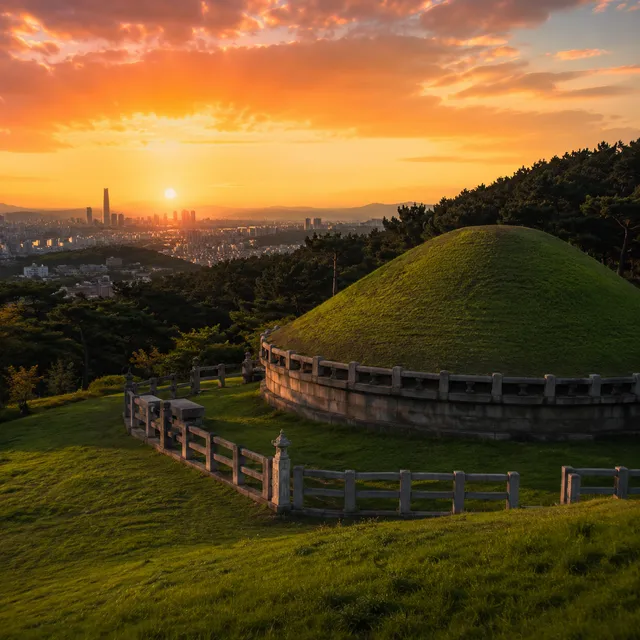
Krakus Mound at sunset
An ancient man-made mound in Podgórze of uncertain, probably early-medieval origin, with one of the best free 360-degree views of Krakow. 20 minutes uphill from the Heroes of the Ghetto Square. Locals come with a bottle of wine and watch the sun drop behind Wawel.
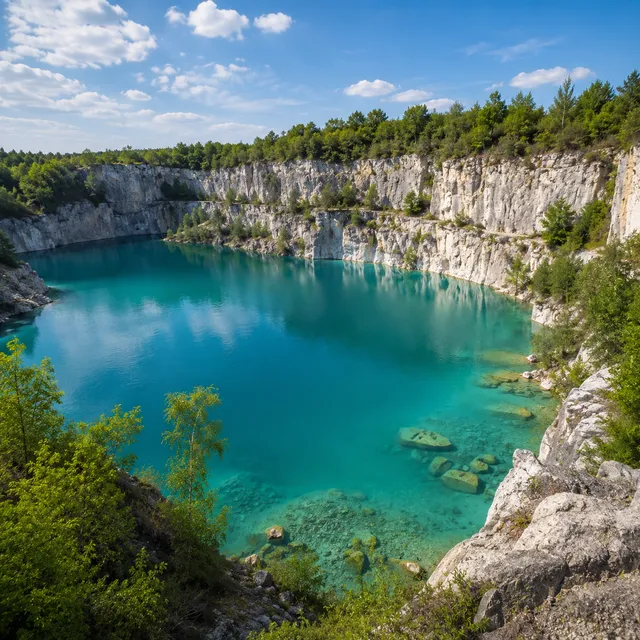
Zakrzówek turquoise lagoon
A flooded limestone quarry, 4km southwest of the Old Town. Crystal clear turquoise water surrounded by 30m cliffs. Open as a public bathing area in summer. Tram 8 to Norymberska, then a 10-minute walk.
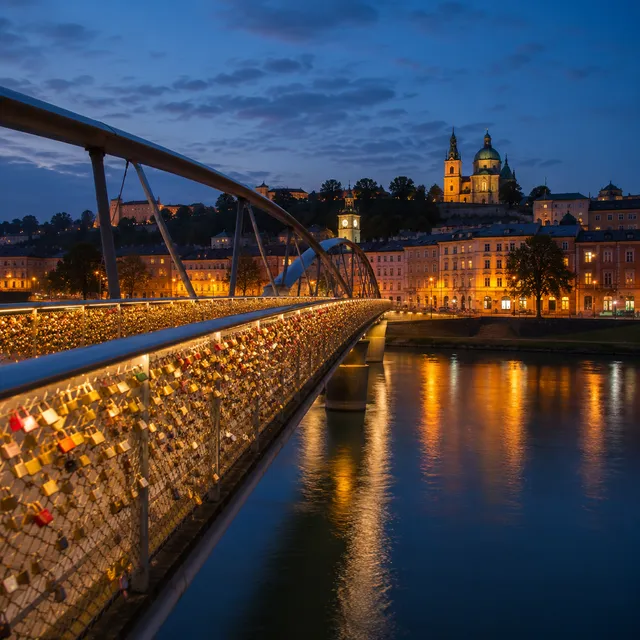
Father Bernatka Footbridge
A 2010 pedestrian bridge connecting Kazimierz and Podgórze, decorated with bronze acrobat sculptures suspended over the Vistula. Couples lock padlocks to the railings. Photogenic at blue hour.
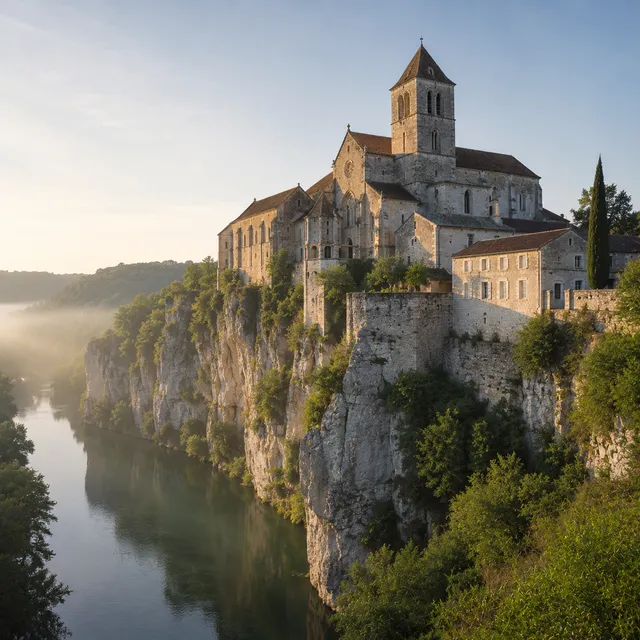
Tyniec Benedictine Abbey
Founded in 1044 on a limestone cliff over the Vistula, this is the oldest functioning monastery in Poland. 30 minutes from the centre by bus 112. Monks still bake their own bread which you can buy on site.
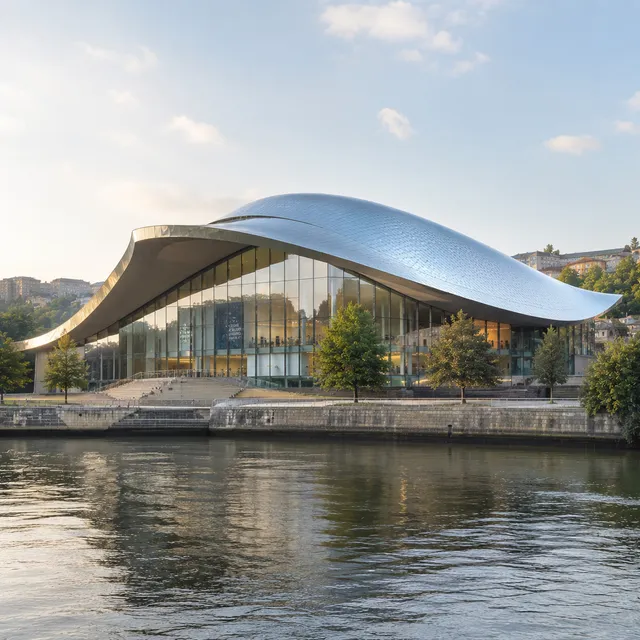
Manggha Japanese art museum
Built to house the Japanese art collection of Feliks Jasieński; the museum building was funded by film director Andrzej Wajda. Across the Vistula from Wawel. The riverside cafe has the best Wawel view in Krakow and almost nobody knows about it.
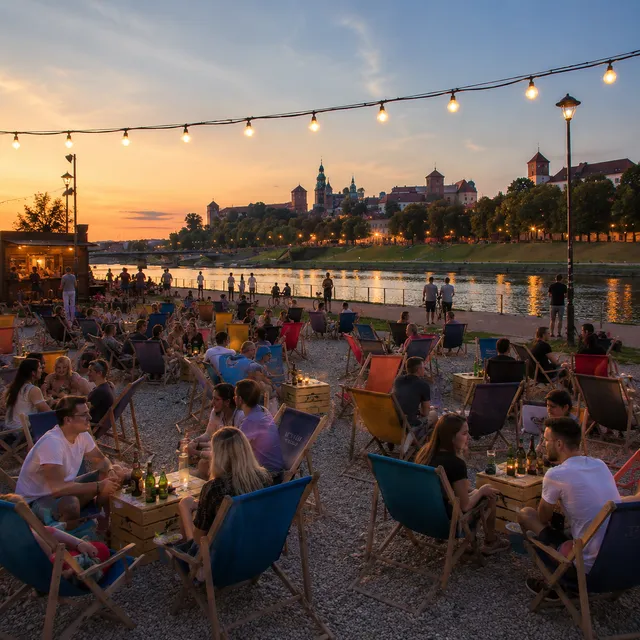
Forum Przestrzenie riverside bar
A brutalist 1980s hotel converted into one of the most photographed bars in Krakow. Deck chairs on the Vistula bank in summer, indoor space heated in winter. Drinks are reasonable and the view of Wawel is unmatched.
Before you go to Krakow
Entry rules, documents and the apps to install before you fly
Krakow, sometimes spelled Cracow in English, is one of the easiest European city breaks to organise. Poland is in the Schengen Area, so for most visitors there is no visa and very little paperwork. Here is exactly what you need before you travel, current for 2026.
A few essential apps that will make your trip to Krakow easier, cheaper and more enjoyable.





Money in Krakow: cards, cash and hidden fees
Poland uses the zloty, not the euro - here is how to pay without losing money
Poland's currency is the Polish zloty (PLN, written zl), divided into 100 groszy. It is the only money accepted, so there is no point bringing euros to spend. The good news: Krakow is almost cashless, and two simple habits stop the banks quietly skimming your holiday budget.
Staying connected: SIMs, eSIMs and WiFi
Getting online in Krakow without a roaming shock
Krakow is well covered by fast 4G and 5G, and getting online is cheap if you plan ahead. Your options, from easiest to cheapest:
Is Krakow safe? Scams and street smarts
Krakow is very safe - the main risk is your wallet, not your safety
Krakow is one of Europe's safer cities and violent crime against tourists is rare. The real risks are a handful of well-known scams and pickpockets in crowds, and a little awareness handles all of them.
Local etiquette and the rules tourists get caught by
Poles are easygoing, but a few local rules carry real fines
Most Krakow etiquette is common sense, but a handful of rules catch visitors off guard, and some come with on-the-spot fines. The ones worth knowing:
Krakow Airport to City Centre
Four ways to get from Krakow-Balice (KRK) to the Old Town - prices, times, when each option makes sense
Every 30 min, 04:00-24:00
Express bus, ~30 min
Official rank; Bolt or Uber about 60-80 PLN
Fixed price, driver waiting with name sign, flight tracked
1-3 pax
Heading to Old Town or Kazimierz? All four options drop you within 5-15 minutes walk of central hotels. The train terminates at Kraków Główny (main station) - the Old Town is a 5-minute walk from there.
Getting around Krakow
Trams, buses and one ticket that does both
The Old Town and Kazimierz are walkable end to end, so you will mostly travel on foot. When you do need a tram or bus, the same MPK time ticket works on both, so just pick how long your trip will take. Buy from the yellow machines at stops or in the app, validate the moment you board, plan routes with Jakdojade, and grab a Bolt or Uber late at night when trams thin out.
Best time to visit Krakow
Weather, crowds and what is actually on, month by month
Krakow is a year-round city, but the experience shifts a lot between a sunny September afternoon on the Rynek and a frosty December evening at the Christmas market. Here is how the four seasons really feel, so you can pick dates that match what you came for.
Krakow month by month
Typical weather, crowds and what is on, for every month of the year
Once you know roughly when you can travel, here is how each month actually feels in Krakow, sometimes spelled Cracow. Temperatures are typical daytime highs and night lows; festival dates shift a little each year, so confirm them on the official event pages before you book.
Practical Tips
Everything you need to know before visiting Krakow
Getting There
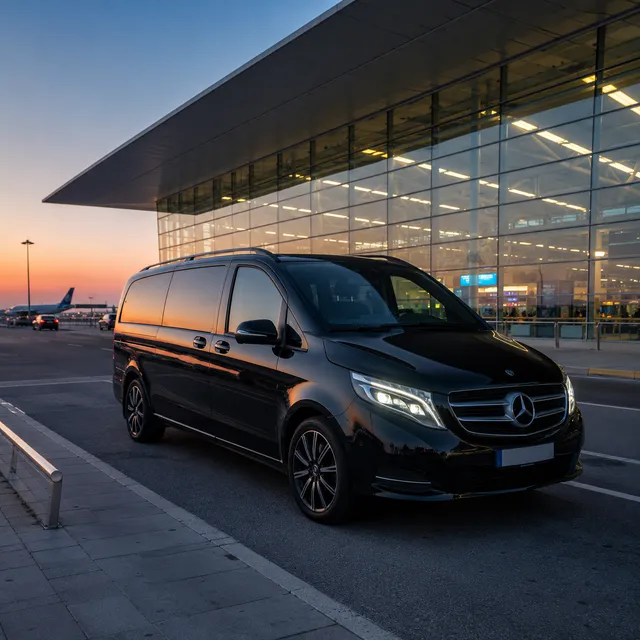
Krakow Airport (KRK) is about 11 km west of the centre (15 km by road). Train takes 20min, Bolt/Uber ~60-80 PLN, metered taxi ~100-140 PLN. We offer private airport transfers.
Currency & Prices
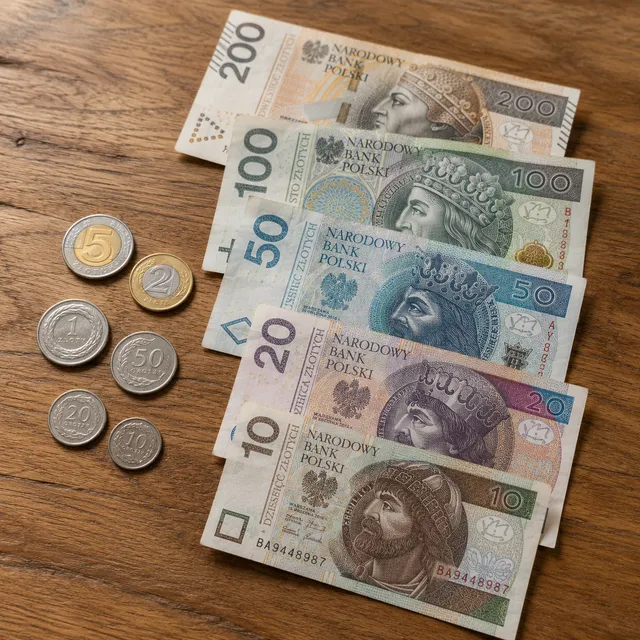
Poland uses PLN (zloty). Krakow is affordable - meal for 30-50 PLN, beer 14-22 PLN, coffee 12-20 PLN. 1 EUR is about 4.3 PLN.
Weather & Best Time
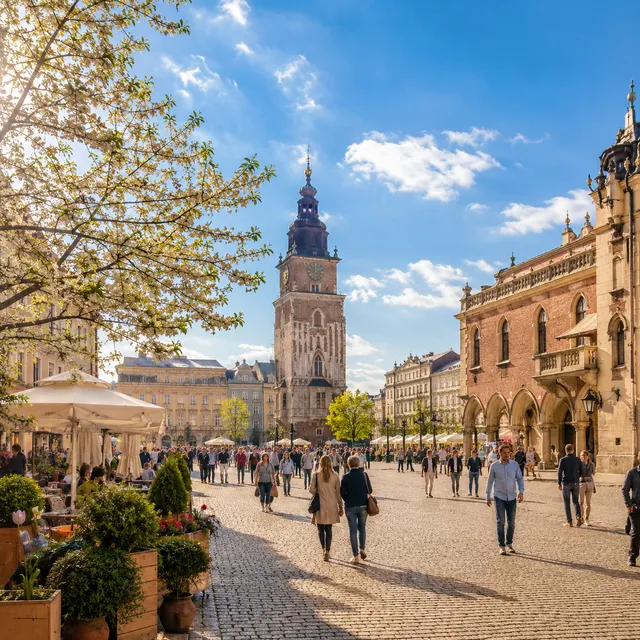
Best months: May-September. Summer avg 25°C. Winter can drop to -5°C but Christmas markets are magical. Pack layers year-round.
Getting Around
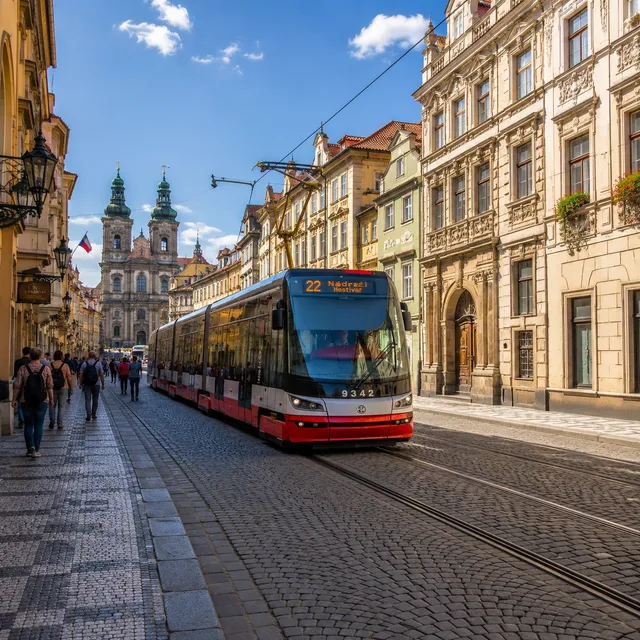
Old Town is very walkable. Trams cover the city. For groups or comfort, our electric cart tours are the best way to see the main sights.
Must-Try Food
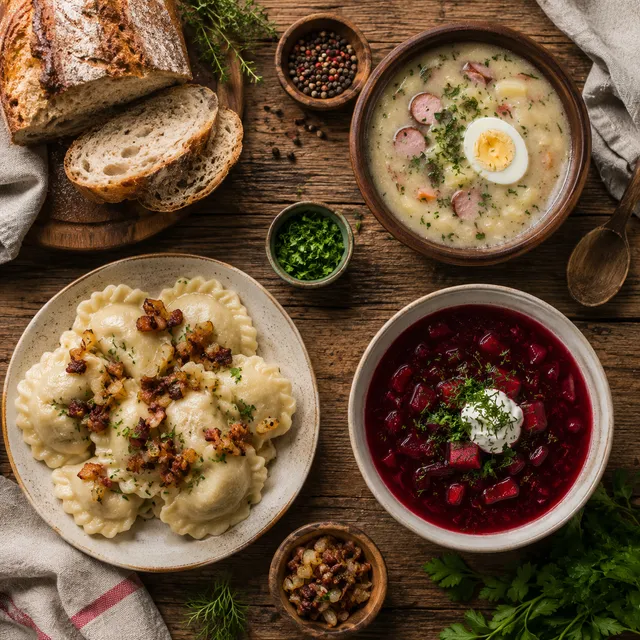
Pierogi (dumplings), zapiekanka (Polish baguette pizza), obwarzanek (pretzel ring), and oscypek (smoked sheep cheese).
Safety
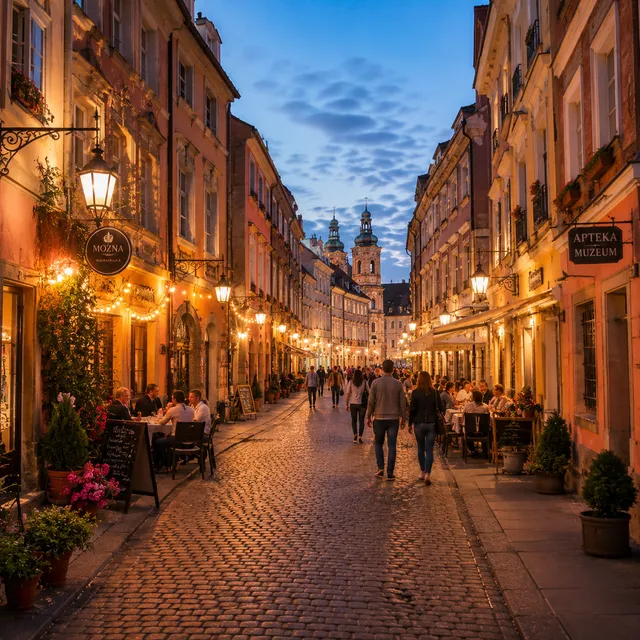
Krakow is very safe for tourists. Normal precautions apply - watch your belongings in crowded areas and tourist spots.
Common mistakes to avoid
Five quick things first-timers get wrong, and how to skip the hassle.
Do not change money at the kantors right on the Main Square, the rates there are poor; walk a few minutes to a kantor on Szewska or near the Galeria Krakowska train station, or just pay by card.
Do not show up at Auschwitz-Birkenau without a booking, entry is timed and online only since March 2026, and slots sell out days ahead in summer, so reserve before you go (or let us handle the transfer and entry).
Do not assume you can pay in euros, Poland uses the zloty (PLN), and while cards work almost everywhere, cash in euros usually does not.
Do not jump into an unmetered taxi waiting at Kraków Główny, take a metered cab, order a Bolt or Uber, or book a fixed-price transfer so you know the fare upfront.
Do not skip the milk bars (bary mleczne), these old-school canteens serve pierogi, soups and cutlets, and a full meal still runs around 15 to 30 PLN.
Where to Eat in Krakow
From cheap local canteens to sit-down restaurants - Krakow has one of the best food scenes in Central Europe
Milk Bars (Bar Mleczny)
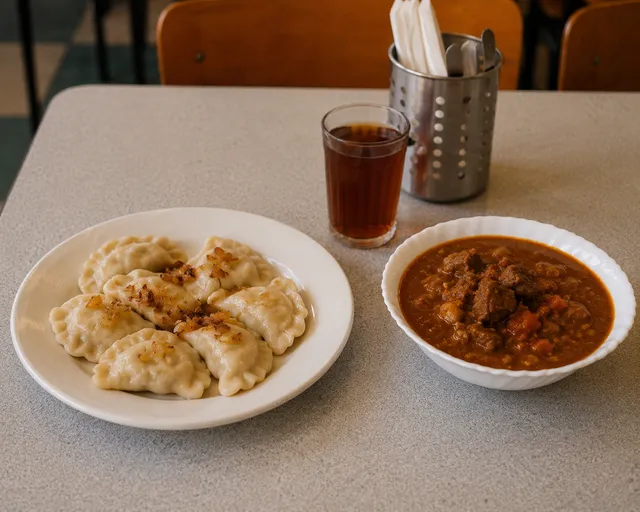
Communist-era subsidised canteens still operating today. Full meal for 15-30 PLN. Try Bar Mleczny Krakus on Św. Gertrudy street or Milkbar Tomasza near the Main Square. Pierogi, bigos (hunter's stew), kotlet schabowy (breaded pork cutlet).
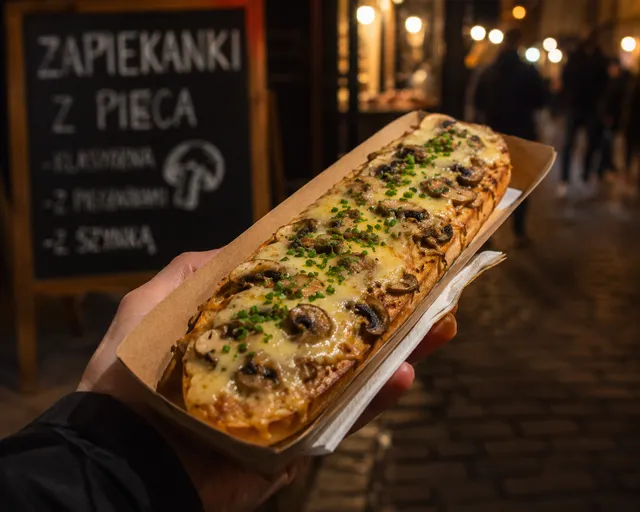
Zapiekanka at Plac Nowy
The round building in the middle of Plac Nowy in Kazimierz has a dozen windows selling zapiekanka - toasted half-baguettes with mushrooms, cheese and toppings of your choice. Open late, 10-18 PLN. A Krakow ritual after a night out.
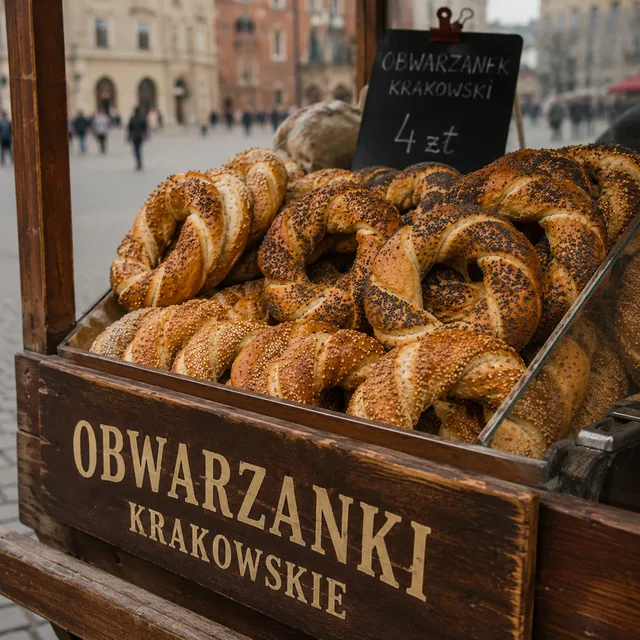
Obwarzanek
Krakow's signature street snack - a twisted bread ring coated in poppy seeds, sesame or salt. Sold from blue carts on almost every corner in the Old Town. 3-5 PLN. The city sells over 100,000 of these daily.
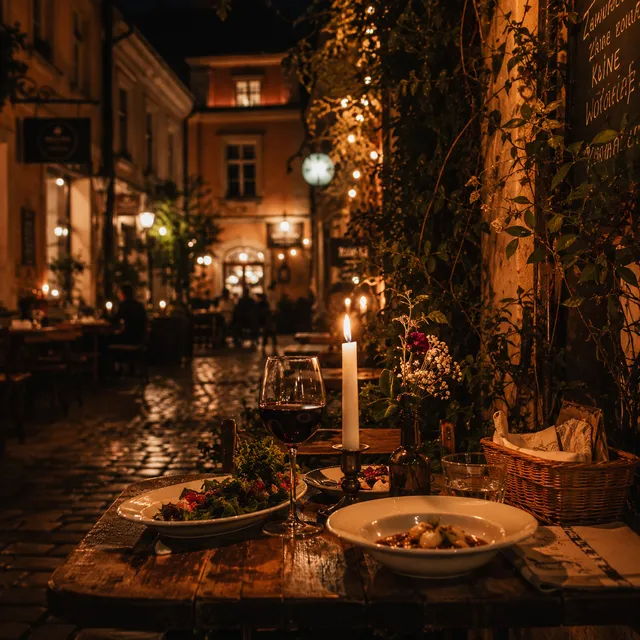
Kazimierz Restaurants
The streets around Plac Nowy and ul. Józefa have the highest density of good restaurants in Krakow. Polish, Jewish, Italian, Vietnamese, Georgian - all price ranges. Starka, Marchewka z Groszkiem, and Hamsa are local favourites.
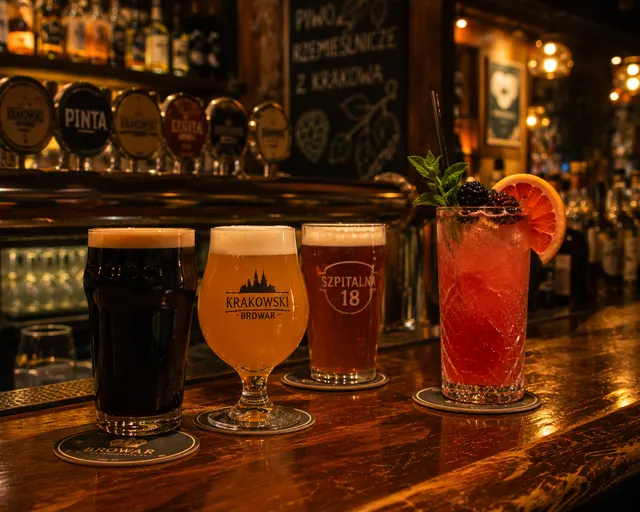
Craft Beer & Cocktails
Krakow has a thriving craft beer scene. Omerta and House of Beer in Kazimierz stock dozens of Polish microbrews. For cocktails, try the cellar bars along Floriańska or Stolarska streets in the Old Town.
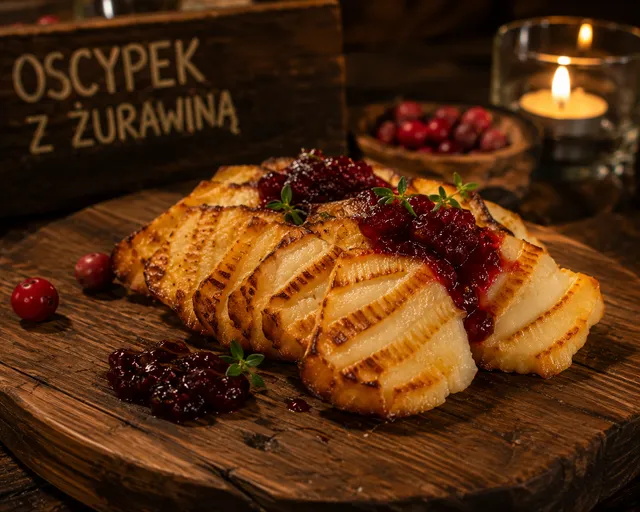
Oscypek & Local Cheese
Smoked sheep cheese from the Tatra Mountains, usually grilled and served with cranberry jam. Sold by highlander vendors on the Main Square and in Zakopane. Goes well with a cold beer.
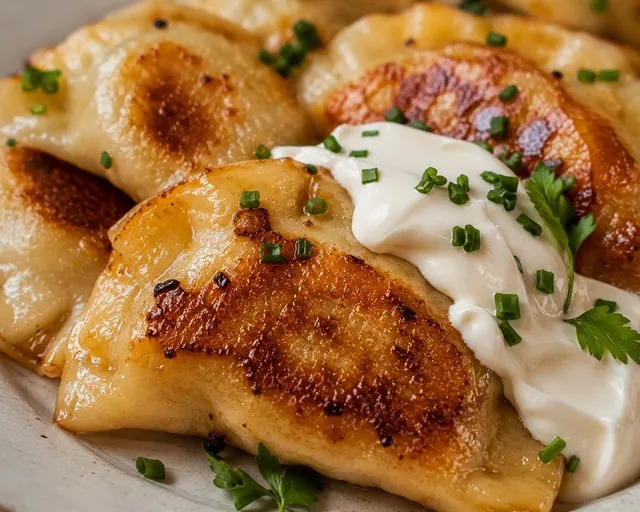
Best Pierogi in Krakow
For the classic boiled pierogi, head to Pierogarnia Krakowiacy on Szewska or Pierogarnia Pod Aniołami in the Old Town. Sweet pierogi with blueberries are a summer specialty. A plate of 10 costs 25-40 PLN. Vegetarian (ruskie - potato and cheese) is the most ordered version.
Polish food: what to order and where
Eight dishes to try in Krakow, what they are and a good place for each
You can eat very well in Krakow for very little. Start with these eight classics. The cheapest, most authentic versions are usually at a bar mleczny (milk bar), a subsidised canteen serving home-style Polish food. The places below are long-running local favourites, though opening hours change, so check before making a special trip.
Drinks: vodka, craft beer, mead and nalewki
What to drink in Krakow, and how the locals take it
Poland is a vodka country, but Krakow's drinking scene goes well beyond it. Four things worth trying:
Prices in Krakow and daily budgets
What things cost, and what to budget per day
Krakow is one of the better-value city breaks in Europe. The figures below are rough 2026 guides in zloty; they move with the season, demand and the exchange rate, so treat them as a ballpark, not exact prices.
Prices are approximate and may vary depending on the season, location and type of venue.
What to budget per day, per person
Krakow for families, couples, solo travellers and seniors
Who the city suits, with one practical tip for each
Krakow works for almost everyone: it is compact, safe and good value. What changes is the detail, so here is what to expect by type of trip.
Frequently Asked Questions
Quick answers to the most common questions about visiting Krakow
May through September offers the warmest weather and longest days. July and August are peak tourist season - expect crowds at major sites. June and September are ideal: warm enough for outdoor sightseeing but less crowded. December is worth considering for the Christmas market on the Main Square, one of the most popular Christmas markets in Central Europe.
Two to three days is the sweet spot. One day covers the Old Town highlights. Add a second day for Wieliczka or Auschwitz. A third day lets you do a mountain trip to Zakopane or the Tatras, or explore Kazimierz and Nowa Huta at a slower pace. If you want both Wieliczka and Auschwitz, plan for at least three days.
Yes. Krakow is generally considered a safe destination for visitors. Violent crime targeting tourists is extremely rare. Standard precautions apply: keep an eye on your phone in crowded bars, use licensed taxis or ride apps, and avoid currency exchange booths on the Main Square (bad rates). The city centre is well-lit and busy until late at night.
No. English is widely spoken in hotels, restaurants, and tourist areas. Younger Poles in particular speak fluent English. Learning a few words helps - "dziekuje" (thank you) and "prosze" (please) go a long way. Menus in the Old Town and Kazimierz almost always have English translations.
Krakow Airport (KRK) is about 11 km west of the centre (15 km by road). The train runs every 30 minutes and takes approximately 20 minutes to the main station (Kraków Główny) - tickets cost about 20 PLN. A Bolt or Uber is about 60-80 PLN; an official-rank taxi is around 100-140 PLN. We offer private airport transfers with a driver waiting at arrivals - check our transfers section for prices.
Poland uses the zloty (PLN), not the euro. Some tourist-facing shops accept euros but at poor exchange rates. Card payments are accepted almost everywhere, including market stalls and trams. Use a travel card with no foreign transaction fees (like Revolut or Wise) for the best rates. ATMs are plentiful - use bank-branded ATMs and decline "dynamic currency conversion" to avoid fees.
Yes, Krakow is one of the most rewarding European city breaks for the price. The Old Town survived World War II largely intact and holds UNESCO World Heritage status. You can walk a thousand years of history in an afternoon, eat a full meal for 25 PLN, and reach Auschwitz, Wieliczka or the Tatras in under two hours. It was voted the top UK city-break destination three years running by Which?.
Start with pierogi (boiled dumplings - try ruskie with potato and cheese, or sweet ones with blueberries in summer). Try zapiekanka from Plac Nowy in Kazimierz, obwarzanek from any blue cart in the Old Town for 3 PLN, and oscypek smoked sheep cheese grilled with cranberry jam. For a real local experience, eat at a milk bar (bar mleczny) - Bar Mleczny Pod Temida and Bar Mleczny Centralny serve a full meal for 15-30 PLN.
Wawel Royal Castle, the Main Market Square with the St. Mary Basilica, the Cloth Hall, and the seven historic synagogues in Kazimierz. For day trips: Auschwitz-Birkenau Memorial and the Wieliczka Salt Mine are both UNESCO sites within 90 minutes. Add the Schindler Factory museum in Podgórze, and climb Krakus Mound at sunset for the best free panoramic view of the city.
Zakrzówek lagoon (turquoise quarry lake, open for swimming in summer), Krakus Mound (an ancient mound of uncertain origin with one of the best free city panoramas), Tyniec Abbey (oldest functioning monastery in Poland, 11th century), and Forum Przestrzenie (brutalist hipster bar on the Vistula with deck chairs and the best Wawel view at sunset). Most tourists skip them, locals love them.
Auschwitz-Birkenau is 70 km west of Krakow and takes around 90 minutes by car. Entry is free but you must reserve an entry pass in advance (online only since March 2026) at the official site visit.auschwitz.org - book well ahead, as passes sell out weeks in advance in high season. Plan for a full day: 3.5 hours for the tour itself, plus travel. We organize private transfers and licensed guides if you would rather not arrange logistics yourself.
No. Krakow is one of the better-value city breaks in Europe. A meal at a milk bar runs about 15 to 30 PLN, dinner for two at a good restaurant about 160 to 300 PLN, and most museums 20 to 45 PLN. See the Prices section for a full breakdown.
As a rough 2026 guide: backpackers manage on about 120 to 180 PLN a day, mid-range travellers about 300 to 450 PLN, and a comfortable trip around 600 PLN or more, per person. These are ballpark figures that move with the season and exchange rate.
Card and contactless work almost everywhere, including trams and market stalls. Carry around 100 PLN in cash for milk bars, street stalls and the few cash-only bars in Kazimierz.
About 10 percent for good restaurant service is normal but not obligatory. Terminals rarely offer a tip option, so state the total you want to pay before the card is tapped, or leave the tip in cash.
The Polish zloty (PLN, written zl), divided into 100 groszy. Poland does not use the euro, and paying in euro is a poor deal.
Use ATMs branded by a real bank such as PKO, Santander, ING or mBank. Avoid the freestanding Euronet machines, and always decline the offer to be charged in your home currency, choose zloty.
Most visitors, including from the UK, US, Canada, Australia and Ireland, need no visa for stays up to 90 days in any 180-day period across the Schengen area. See Before You Go.
No. ETIAS is not yet in force in 2026, so there is nothing to apply for. The EU expects to launch it later, after which it will cost 20 EUR and last three years. Ireland is exempt.
Yes, Poland is in both the European Union and the Schengen area, so there are no border checks when you arrive overland from another Schengen country.
Trams and buses are run by MPK. Buy tickets in the Jakdojade app or from machines at stops and on board, and validate a paper ticket the moment you board. Tickets come as single, timed and 24-hour options.
Both work well and show the fare before you book. Bolt is often the cheapest, Uber is close behind, and either beats flagging an unmarked taxi. A short central ride is about 18 to 30 PLN.
A short ride across the centre is about 18 to 30 PLN through an app, and the airport is around 60 PLN. Use Bolt or Uber, or an official rank, rather than a driver who approaches you.
No. The centre is compact, largely pedestrianised and easy on foot, and parking is limited and paid. A car only helps for remote day trips, and even those are easy by tour or train.
Krakow has four proper seasons: warm summers around 25C, crisp golden autumns, cold snowy winters near 0C, and fresh springs. See the month-by-month section for the detail.
Yes, usually from December to February. The Main Square Christmas market under snow is one of the city's prettiest sights.
On the Main Market Square, running from late November to early January, with mulled wine, grilled oscypek cheese and regional food and crafts.
February and November are the quietest and cheapest months, with the lowest hotel prices, though the weather is cold and grey.
A bar mleczny is a subsidised canteen serving cheap, home-style Polish food. A full two-course meal still costs about 15 to 30 PLN. You order at the counter and carry your own tray.
Very good. Classics like pierogi ruskie and potato pancakes are naturally meat-free, and Kazimierz in particular has a strong vegetarian and vegan scene.
Zapiekanka, a toasted open baguette with mushrooms and cheese, from the round stalls on Plac Nowy in Kazimierz, and the ring-shaped obwarzanek pretzel from blue carts across the Old Town.
Yes, tap water in Krakow is clean and safe to drink.
One day is enough for the Old Town highlights, but two to three days is far better, giving time for Wawel, Kazimierz and a day trip such as Wieliczka or Auschwitz.
Yes. The Wieliczka Salt Mine is a UNESCO site about 30 minutes from the centre, with carved chapels and chambers hundreds of metres underground. Allow two to three hours plus travel.
Head underground to the Rynek Underground museum or the Wieliczka Salt Mine, or visit Schindler's Factory, the Cloth Hall galleries, St. Mary's Basilica and the city's many museums and churches.
It is a popular destination for them, with lively bars in Kazimierz and the Old Town. Just avoid the strip-club and unmarked-taxi traps covered in the Safety section, and never follow a tout to a venue.
Very. You can cross the Old Town on foot in about 15 minutes, and nearly all the main sights, restaurants and Kazimierz are within an easy walk.
Yes. It is compact and walkable, with parks, the Planty ring, mound climbs, the salt mine and horse-drawn carriages. Auschwitz is advised for ages 14 and over.
Yes. The Old Town and Kazimierz stay busy and well-lit late into the night. Take the usual care with your drink and belongings in crowded bars.
Poland uses Type C and Type E sockets at 230V, the standard round two-pin European plugs. Visitors from the UK, US and elsewhere need a travel adapter.
Both name the same city. Krakow is the Polish spelling, Cracow is the older English form, and Krakow without the accent is the common modern English spelling. You will see all three.
Yes. Validate a paper tram or bus ticket the moment you board, or activate it in the Jakdojade app. An unvalidated ticket counts as no ticket, and inspectors do check.
The common ones: drinking alcohol in the street, taking unmarked taxis, accepting conversion to your home currency when paying by card, and forgetting to validate a tram ticket. See the Etiquette and Safety sections.
Excellent. Krakow sits within about two hours of Auschwitz-Birkenau, the Wieliczka Salt Mine, Zakopane and the Tatra Mountains, which makes it an ideal base. See the Day Trips section.
Mostly no. Under Poland's Sunday trading ban, large shops and all shopping malls are closed on most Sundays, with only about eight trading Sundays a year (several of them before Christmas). What stays open: small owner-run shops, bakeries, petrol stations, on-duty pharmacies, restaurants and cafes, and shops at the airport and the main train station. Stock up on Saturday.
From our Krakow blog
More reading before your trip
Private transfers with YourKrakow
Door-to-door private rides at a fixed price, no shared buses
Book a Krakow tour with a local guide
Browse our tours, book a day trip, or hop on our electric golf cart (a small electric car, locally a melex): hotel pickup included or we meet you at any agreed point in central Krakow.