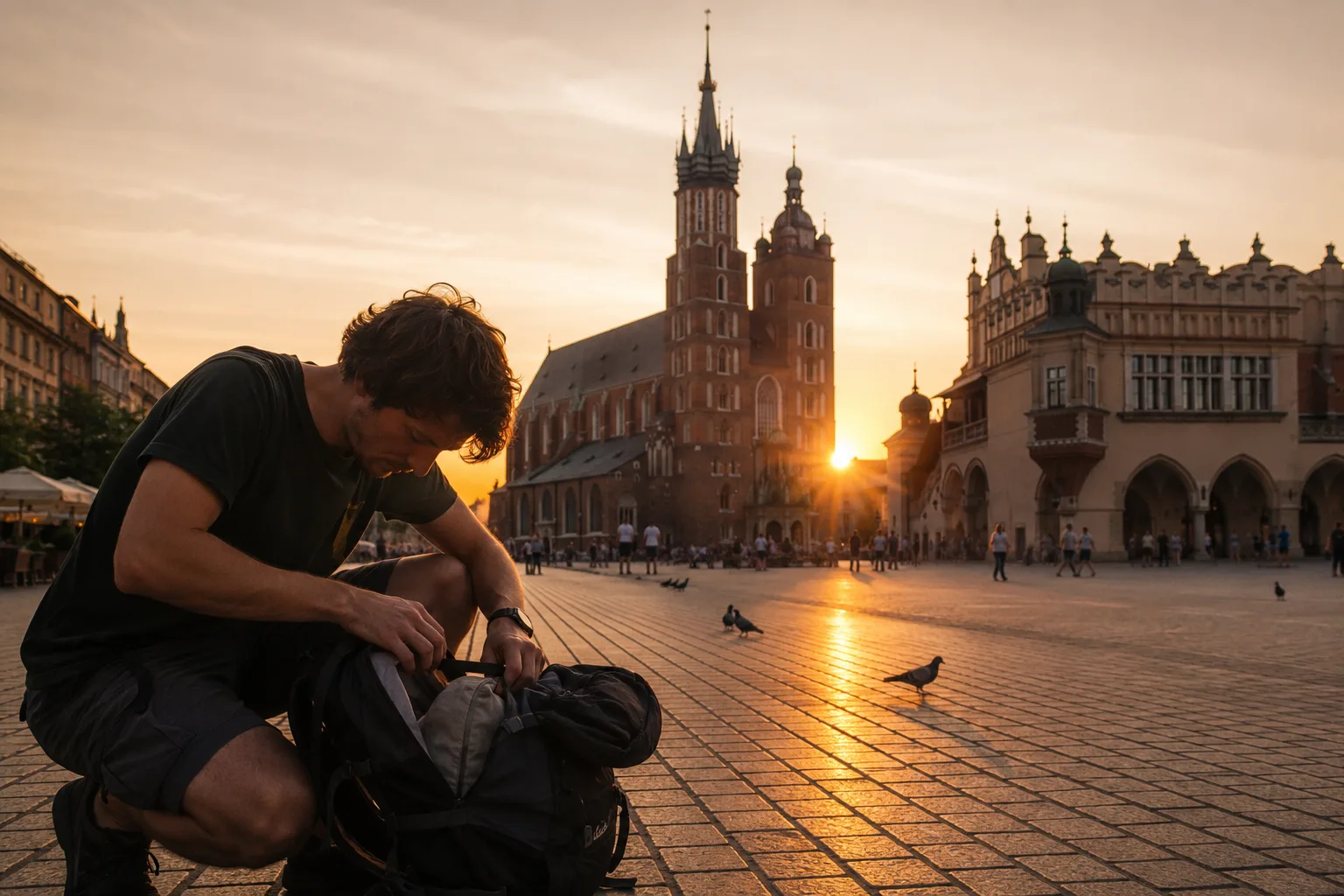
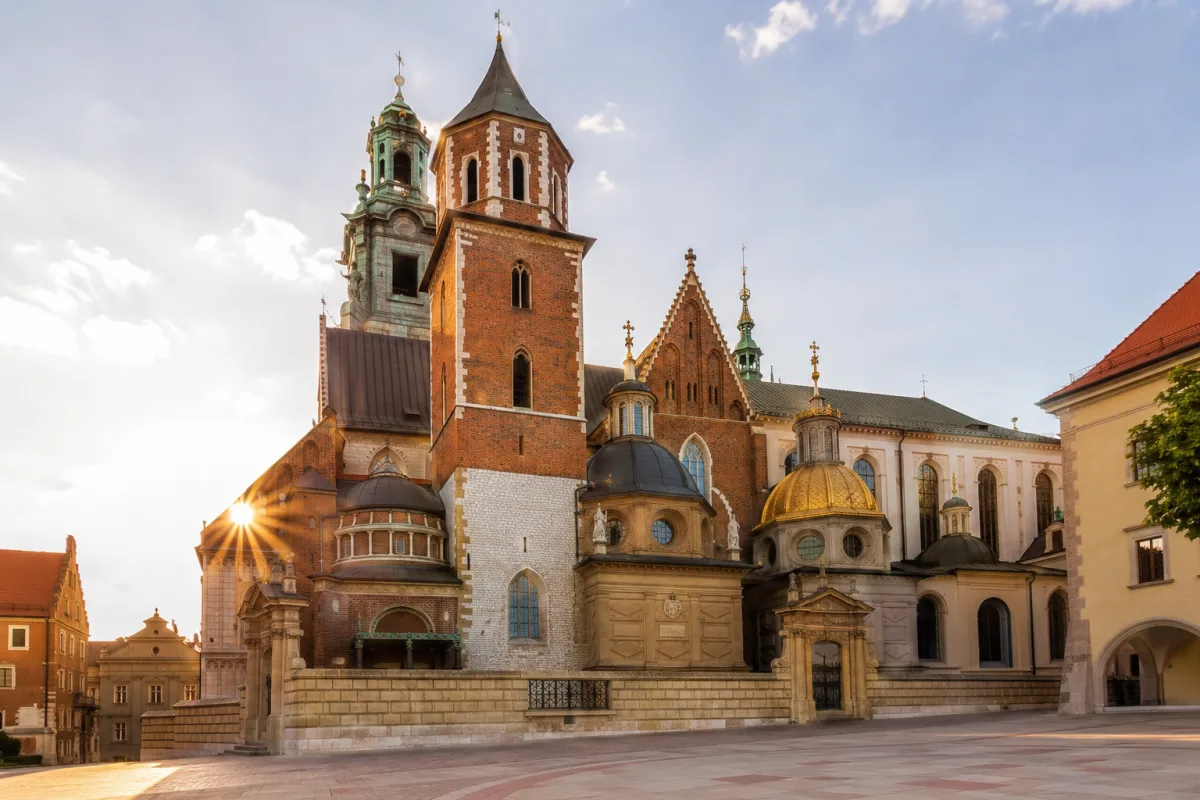
Kraków's Main Market Square, or Rynek Główny, is the huge medieval square at the centre of the Old Town. It is free to walk across at any hour, ringed by the Cloth Hall, St Mary's Basilica and the Town Hall Tower, and it is where most first-time visitors naturally begin their trip.
This guide explains what the square is, what stands on it, what costs money and what does not, and a few practical things that will save you money and hassle while you are there.
The short version
The square itself is a free public space, open day and night. You only pay for the ticketed attractions on or under it: the art gallery upstairs in the Cloth Hall, the climb up the Town Hall Tower, and the Rynek Underground museum. Everything else, including browsing the Cloth Hall market stalls and standing to hear the hourly trumpet call, costs nothing.
Set aside an hour or two to take it in slowly. If you only do one paid thing here, climb the Town Hall Tower for the view, or go underground to see the medieval city beneath your feet.
How old and how big is the square?
The Rynek was laid out in 1257, when Kraków received its town charter under Magdeburg Law during the rebuilding that followed the Mongol invasion of 1241. The street plan around it has barely changed since. Each side measures a little over 200 metres, giving an area of close to 4 hectares, about 40,000 square metres. That makes it one of the largest medieval town squares in Europe. As part of the historic centre of Kraków, it was among the first places added to the UNESCO World Heritage List, in 1978.
What stands on the square
Five landmarks give the Rynek its shape, plus one famous statue.
The Cloth Hall (Sukiennice)
The long arcaded building running down the middle of the square is the Cloth Hall, a marketplace since the Middle Ages and rebuilt in its current Renaissance form in 1555. The ground-floor arcade is a covered market of stalls selling amber, jewellery, leather and souvenirs, and it is free to walk through. Upstairs is the Gallery of 19th-Century Polish Art, the oldest branch of the National Museum in Kraków, with works by Matejko, Chełmoński and other Polish masters. Gallery tickets are around 35 PLN (25 PLN reduced), open Tuesday to Sunday, with Tuesday free for the permanent collection. Check current prices on mnk.pl before you go.
St Mary's Basilica
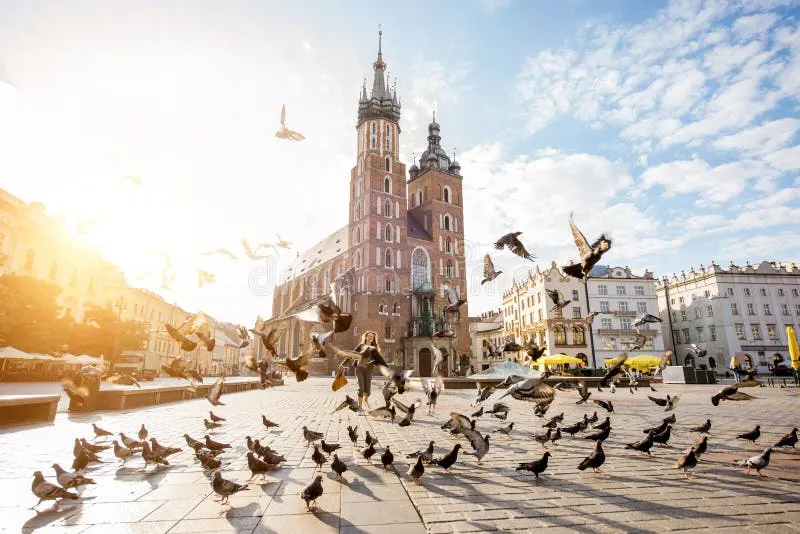
The tall brick church with two unequal towers on the corner of the square is St Mary's Basilica, home of the Veit Stoss high altar and the trumpet call described below. It has its own visiting arrangements for tourists and is worth a dedicated visit, so we only introduce it here.
The Town Hall Tower
The lone Gothic tower on the west side is all that remains of Kraków's medieval town hall, which was demolished in the early 19th century. It is now a branch of the Museum of Kraków, and you can climb its roughly 110 steps for a view over the rooftops. Tickets are around 22 PLN (16 PLN reduced), and entry is free on Mondays. Confirm hours on muzeumkrakowa.pl.
The Rynek Underground
Beneath the eastern half of the square sits the Rynek Underground, a modern archaeological museum built around the excavated medieval market level, with foundations, trade routes and artefacts shown under glass floors. Tickets are around 36 PLN (32 PLN reduced), with free entry on Tuesdays and a limited number of same-day tickets, so it can sell out. It is one of the most rewarding paid attractions in the centre.
St Adalbert's Church
The small domed church sitting at an odd angle on the southeast side is St Adalbert's, one of the oldest stone churches in Poland. Its earliest parts date to the 11th century, before the 1257 layout, which is why it sits off the grid and slightly below today's pavement. It is free to enter.
The Adam Mickiewicz Monument
In front of the Cloth Hall stands the bronze monument to Adam Mickiewicz, Poland's national poet, unveiled in 1898. Locals call it "Adaś" and use its steps as the city's classic meeting point. Each December the steps host the annual competition for the szopki, Kraków's ornate Nativity cribs.
The hourly trumpet call
Every hour, on the hour, a live bugle call rings out from the taller tower of St Mary's, played to each of the four points of the compass and stopping abruptly mid-phrase. Legend, popularised in the 1920s, says a medieval trumpeter was shot in the throat by an arrow while sounding the alarm during a Tatar raid, so the tune ends where his did. The watch melody itself is genuine and has been played from the tower since at least 1392, and the noon call is broadcast live on Polish national radio. It is one of those small moments worth pausing for.
Why the square feels so grand
The Rynek was built deliberately large to serve as the trading heart of a merchant city on Europe's medieval routes. Salt, cloth, spices, silk and leather all changed hands here. The square also sits on the Royal Route, the coronation path that Polish kings walked from St Florian's Gate, across the Rynek, and on down Grodzka Street to Wawel Hill. Coronation and funeral processions and acts of royal homage all crossed this open space, which is part of why it still feels like the centre of things.
Practical tips before you go
- The square is free and open around the clock. Only the museums and church interiors are ticketed.
- When you pay by card anywhere near the square and the terminal offers to charge you in your home currency, always choose Polish złoty (PLN). Paying in your own currency triggers a poor built-in exchange rate that costs you more.
- The terrace cafés on the Rynek charge a premium for the front-row view. Check the menu and prices before you sit down, ask for an itemised bill, and watch for cover charges. For a full meal, better value is usually a street or two away.
- Horse-drawn carriages wait near the Cloth Hall. Agree the price and route before you get in.
- For photos, come before about 8am for a near-empty square and soft light, or stay for the blue hour after sunset when St Mary's and the Cloth Hall are lit.
- The Christmas market fills the square from late November to around New Year and is the busiest and most atmospheric time to visit.
Seeing the square and the rest of the Old Town
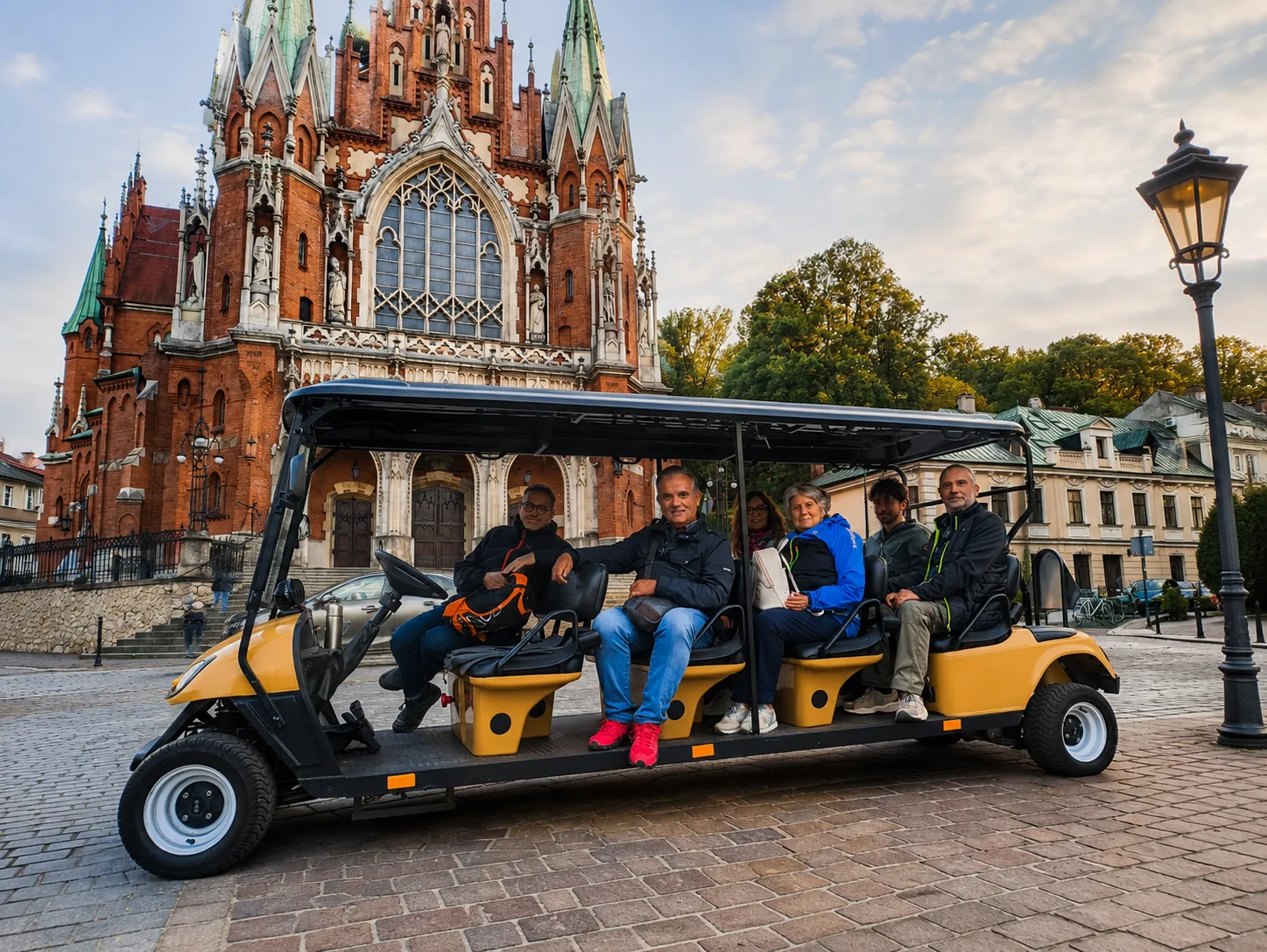
The Rynek is the natural starting point for the Old Town, and everything else is within walking distance: the Cloth Hall, the Planty park ring, and a ten-minute stroll south to Wawel Hill. If you would rather cover more ground without the walking, our electric cart tour of the Old Town starts here and takes in the square, Wawel and the historic streets between them with a local driver.
To plan the rest of your trip, see our full Kraków guide, and for more ideas around the centre, our roundups of the best coffee places in Kraków, the city's churches, and free things to do. Ready for a day trip? Browse our Kraków day trips.
Is the Main Market Square free to visit?
Yes. The square is a public space, free and open day and night. You only pay for the ticketed attractions on it: the Gallery of 19th-Century Polish Art in the Cloth Hall, the climb up the Town Hall Tower, and the Rynek Underground museum. Browsing the Cloth Hall market stalls is also free.
What is the Cloth Hall?
It is the long Renaissance trading hall running down the middle of the square. A market since medieval times and rebuilt in its current form in 1555, its ground-floor arcade is now a covered market of amber, craft and souvenir stalls, while the upper floor holds the Gallery of 19th-Century Polish Art, the oldest branch of Kraków's National Museum.
Can you climb the Town Hall Tower?
Yes. The 70-metre Gothic Town Hall Tower, the only surviving part of the medieval town hall, is a branch of the Museum of Kraków, and you can climb its roughly 110 steps for a view over the square. Tickets are around 22 PLN (16 PLN reduced), with free entry on Mondays. Confirm current hours before you go.
What is under the Main Square?
The Rynek Underground, a modern archaeological museum about four metres below the eastern side of the square. It preserves the medieval market level with streets, foundations and trade artefacts, discovered during excavations and opened in 2010. Tickets are around 36 PLN (32 PLN reduced), and it is free on Tuesdays with a limited number of same-day tickets.
Why are there so many pigeons on the square?
Practically, they thrive on crumbs from visitors. Culturally, legend says they are the enchanted knights of a 13th-century prince, turned into birds and still waiting for his return. Locals say feeding them is bad luck, and it is discouraged for hygiene reasons anyway.
What is the trumpet call I keep hearing?
That is the hejnał, a five-note bugle call played live every hour from the tower of St Mary's Basilica to the four points of the compass. It stops abruptly mid-tune, a nod to a legendary trumpeter said to have been shot while warning the city. The noon call is broadcast on national radio.
Is it worth paying for the terrace restaurants on the square?
For the atmosphere and the front-row view, a coffee or a drink on a terrace can be a lovely splurge, but expect to pay a premium and check the prices before you sit. For a proper meal, the food and value are usually better a couple of streets away. Always choose to be charged in złoty when paying by card.
How much time do you need at the Main Market Square?
An hour or two covers the square itself, the Cloth Hall stalls and the trumpet call. Add about an hour each if you want to climb the Town Hall Tower or visit the Rynek Underground, both of which are easy to combine with a walk around the Old Town.