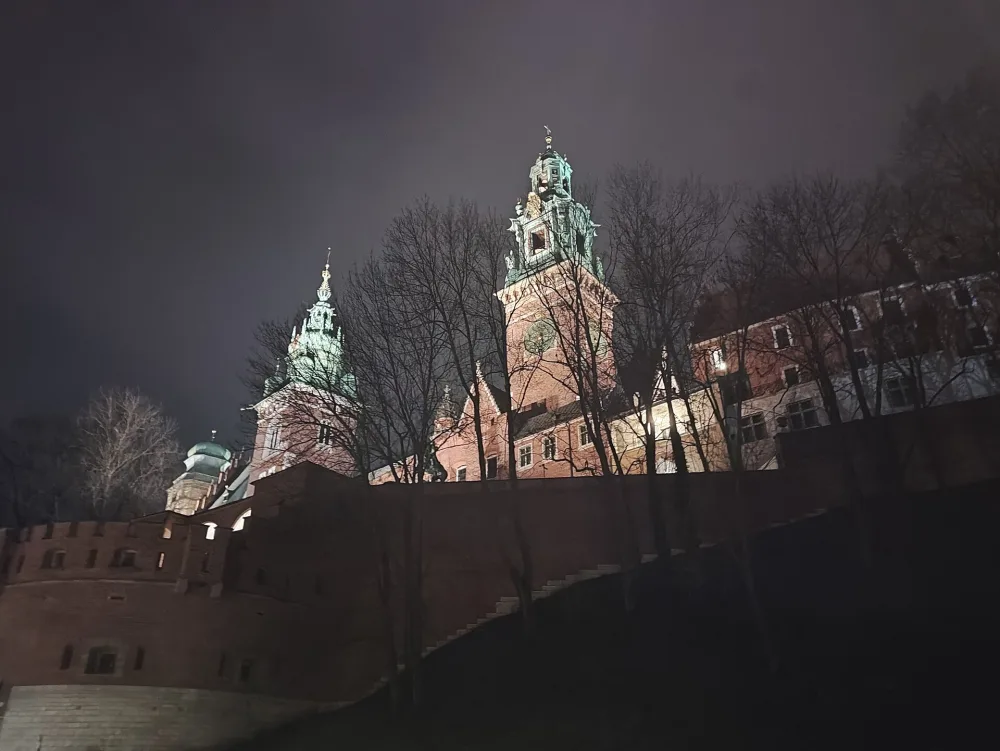
Wawel is the fortified hill above the Vistula where Polish kings once lived, were crowned and were buried. It carries two separate attractions side by side: the Wawel Royal Castle, a state museum, and Wawel Cathedral, run by the Catholic Archdiocese.
The single most useful thing to understand before you go is that these are two institutions with two separate ticketing systems, and inside the Castle most exhibitions are ticketed route by route. Each exhibition is booked separately, on a timed slot, with a daily cap that regularly sells out. Get that framing right and the rest of the visit is straightforward, and our wider Krakow guide can help you slot Wawel into the rest of your trip.
The short version
Walking up Wawel Hill and into the outer arcaded courtyard is free, and you can approach the Cathedral exterior without paying. Everything indoors is separately ticketed: the Castle exhibitions (State Rooms, Crown Treasury, Armoury, Underground and so on) each have their own price and timed entry, and the Cathedral tourist route is a completely separate ticket bought at its own office. Allow at least three hours for the highlights, and book the popular Castle routes in advance because they cap daily numbers and sell out.
What Wawel actually is
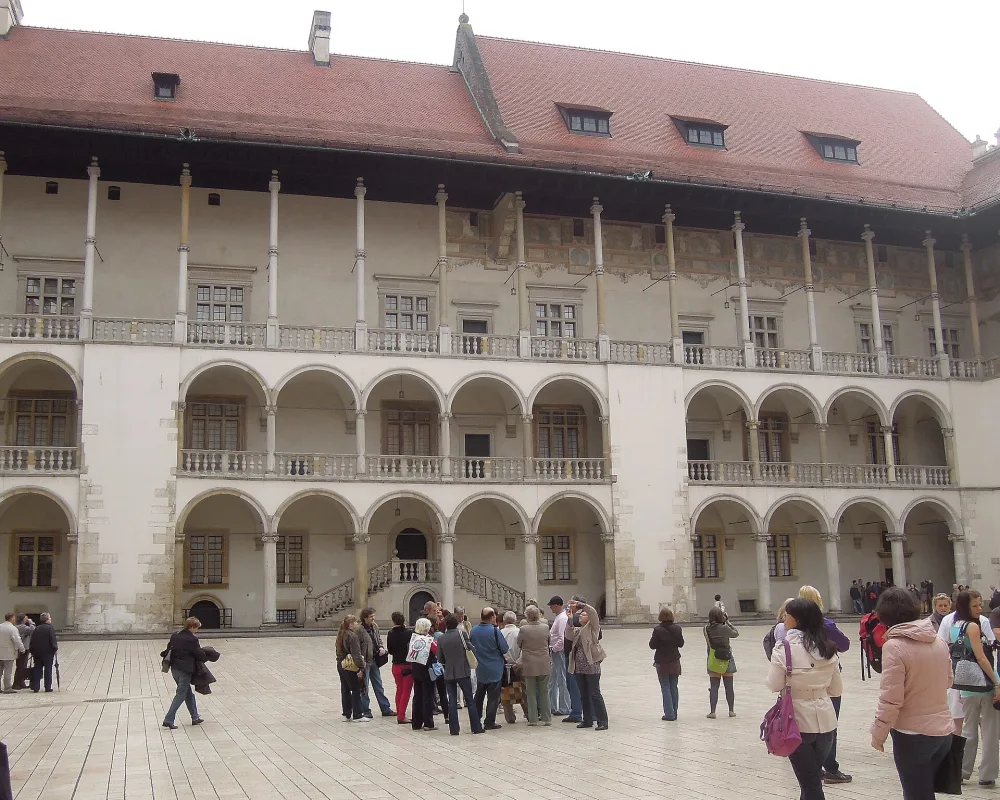
Wawel sits on a limestone hill on the left bank of the Vistula, at the southern edge of Krakow's Old Town. For centuries it was the main residence of Polish monarchs and the seat of royal power. The Castle was built up under King Casimir III the Great in the 14th century, then rebuilt in Italian Renaissance style under King Sigismund I the Old, roughly between 1507 and 1536, which is where the famous arcaded courtyard comes from.
The Cathedral next to it was the coronation site of Polish kings and their burial place, which made the whole hill the nation's spiritual and political centre. Poland's capital function moved to Warsaw in 1596, but Wawel kept its symbolic weight. Wawel Hill is one of the three parts of the Historic Centre of Krakow, listed by UNESCO in 1978 among the first twelve World Heritage sites, and the Castle today is one of Poland's most visited museums.
Castle and Cathedral: two tickets, not one
This is the point that trips up most first-time visitors. The Royal Castle is a state museum. The Cathedral is run by the Archdiocese. Your Castle ticket does not cover the Cathedral, and a Cathedral ticket does not get you into the Castle exhibitions. There is no combined pass that covers both.
On top of that, most Castle exhibitions are ticketed route by route. Each route is priced, timed and capped on its own: the State Rooms across the first and second floors, the Castle Underground (Lost Wawel), the Crown Treasury, the Armoury, the Royal Gardens, a viewing tower and the Dragon's Den. You can book each route separately, or buy a full-access "Wawel for Enthusiasts" pass (around 199 PLN, 149 reduced) that covers all the Castle exhibitions on a single day. Either way each route keeps its own timed slot, valid only on the day of purchase, so popular ones can sell out.
The Castle exhibitions
The showpiece interiors are the State Rooms on the first and second floors: representative chambers, the Wawel arras tapestries, the coffered Envoys' Hall ceiling and the Ottoman Turkish Tents. A combined first and second floor ticket is around 95 PLN and includes an audio guide, and you should budget roughly 1.5 to 2 hours for both floors. The Royal Private Apartments are the more intimate living quarters, and they are covered by the first-floor ticket rather than sold on their own.
The Crown Treasury holds the royal regalia, including the coronation sword Szczerbiec, while the Armoury displays historic weapons and armour. Each is around 47 PLN and they are sometimes sold together, so check the current structure when you book. The Castle Underground, also called Lost Wawel, is an archaeological route through the hill's oldest layers, at around 47 PLN and about an hour to walk.
Prices and ticket structure at Wawel change fairly often, so treat every figure here as approximate and check the official site wawel.krakow.pl before visiting.
The Cathedral route
The Cathedral tourist ticket is around 26 PLN for adults (18 PLN reduced) and is sold separately from the Castle, through the Cathedral's own ticket system online or at its office opposite the entrance. That single ticket covers the Cathedral tour, the climb up the wooden stairs to the giant 16th-century Sigismund Bell, the Royal Crypts where kings, national poets and heroes such as Tadeusz Kosciuszko, Jozef Pilsudski and Adam Mickiewicz are buried, and the Cathedral museums. The full route takes about an hour. Cathedral opening hours differ from the Castle and shift between the summer and winter seasons, so confirm them on the day.
The Wawel Dragon
At the foot of the hill by the river stands the bronze Wawel Dragon (Smok Wawelski), a sculpture by Bronislaw Chromy installed in 1972. It breathes a genuine burst of fire fuelled by natural gas, firing automatically at intervals. Reports of exactly how often vary, so the honest advice is to wait a few minutes and it will go again. It is free to see, outdoors on the riverbank, and it is the easiest crowd-pleaser on the hill, especially with children.
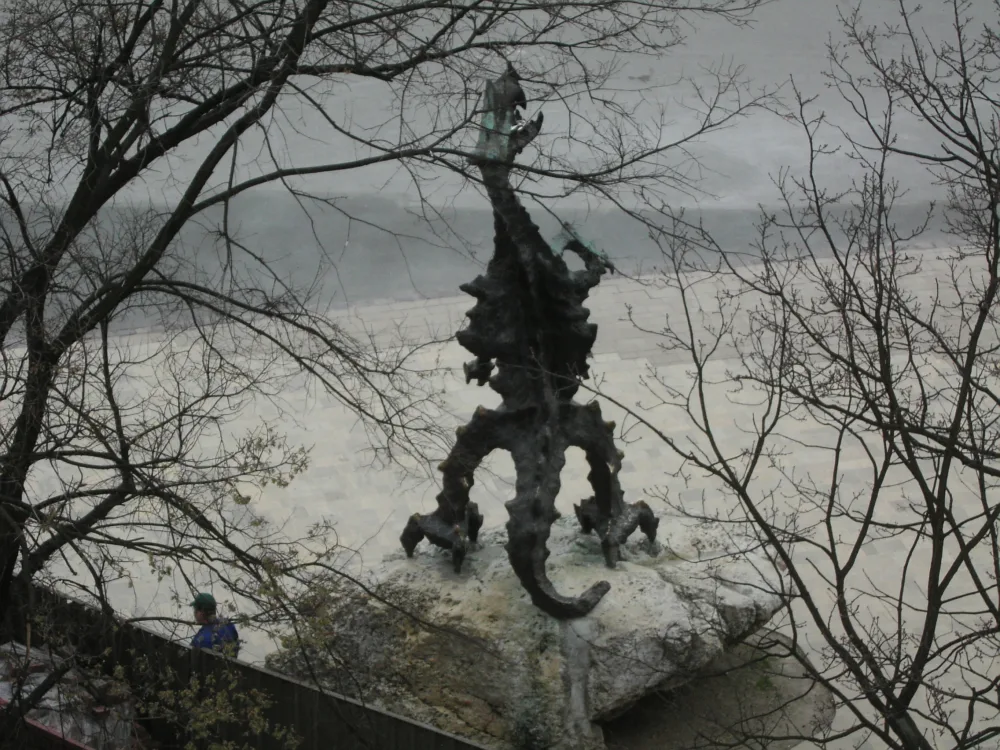
Connected to the legend is the Dragon's Den (Smocza Jama), a natural limestone cave inside the hill. You descend a spiral staircase and walk through the cave, emerging at the riverbank right beside the dragon statue. It costs around 15 PLN, paid at a coin or card machine at the entrance, and it is seasonal, running roughly April to October. Because it is a one-way descent that exits at the river, do it last so you are not climbing back up the hill afterwards. The narrow spiral stairs are not suitable for wheelchairs or strollers.
Getting there and combining your visit
Wawel is at the southern edge of the Old Town. From the Main Market Square it is an easy, mostly flat 10 to 15 minute walk south down Grodzka Street, following the Royal Route. By tram, the nearest stop is Wawel, then a short walk uphill. From the hill it is a short riverside walk to the Kazimierz quarter.
Because Wawel is the southern anchor of the Old Town circuit, it pairs well with a wider loop of the centre. An electric cart tour of the Old Town takes in Wawel Hill, which is a low-effort way to see it along with the sights in between.
Planning your visit
- Buy Castle tickets online in advance at bilety.wawel.krakow.pl. Tickets are released about a month ahead, and popular routes, especially the Royal Private Apartments, sell out days ahead in high season.
- Remember the Cathedral is separate. Its ticket is bought at the Cathedral office on the hill, not online with the museum.
- Arrive around opening, before about 9:30, to photograph the courtyard before the groups arrive. Midweek is calmer than weekends.
- Tickets are valid only for their day and time slot, so do not book the wrong date.
- Large bags must be left at the cloakroom before you enter the exhibitions.
- Allow at least three hours for the highlights, or four to five if you add the Treasury, Underground, a tower and the Dragon's Den.
- Several routes (towers, Dragon's Den, Royal Gardens) are seasonal and close in winter, so check before a cold-season visit.
Budget travellers should note that you can genuinely enjoy Wawel without paying for a single indoor route: the hill, the courtyard, the Cathedral exterior, the river views and the dragon are all free.
What next
Once you have done Wawel, the riverside path leads straight to Kazimierz, and the Old Town sits just to the north. If you have a spare day, the region around the city is easy to explore too, from salt mines to memorial sites, all covered in our roundup of Krakow day trips.
Is Wawel Castle free?
Walking up the hill and into the outer courtyard is free, and you can approach the Cathedral exterior for free. Every indoor exhibition and the Cathedral tourist route need paid, separately priced tickets. Some Castle exhibitions offer limited free-admission passes on certain days, such as Mondays in the warm season, collected at the ticket office.
How long do you need at Wawel?
Plan a minimum of about three hours for the main highlights, meaning a Castle route or two, the Cathedral and the courtyard. Allow four to five hours if you also want the Crown Treasury, Armoury, Castle Underground, a tower and the Dragon's Den. Individual routes run roughly 50 to 60 minutes each for the Castle floors and about an hour for the Cathedral.
Do you need to book Wawel tickets in advance?
In high season, strongly yes. Entry is timed with daily visitor limits, and popular routes such as the Royal Private Apartments sell out. Book online at bilety.wawel.krakow.pl, where tickets are released about a month ahead. The Cathedral ticket is bought separately at its own office on the hill.
Is the Cathedral part of the Castle?
They sit side by side on the same hill and together form Wawel, but they are two separate institutions with separate tickets. The Royal Castle is a state museum, while the Cathedral is run by the Catholic Archdiocese. Your Castle ticket does not cover the Cathedral, and the reverse is also true.
Can you go inside Wawel for free?
You can walk through the outer courtyard for free. To enter the museum exhibitions or do the Cathedral tourist route (crypts, bell tower, museum) you need a paid ticket, though limited free-entry passes are offered for some Castle exhibitions on selected days.
Is Wawel worth it?
Yes. It is Krakow's top historic landmark, the former seat of Polish kings, a UNESCO-listed site and home to the crown jewels, royal apartments, coronation cathedral and royal tombs. Even without paying for the interiors, the free courtyard, the views and the dragon statue make the hill worth the short walk from the Old Town.
Does the Wawel Dragon really breathe fire?
Yes. The bronze statue at the base of the hill by the river breathes a real burst of fire fuelled by natural gas, firing automatically at intervals. Reports of the exact timing vary, so the practical approach is to wait a few minutes and it will fire again.
Is Wawel Castle open on Mondays?
It varies by exhibition. Many core routes run Tuesday to Sunday and close on Monday, but in the warm season a selection of permanent exhibitions opens on Mondays with limited free-admission passes for part of the day, collected at the ticket office. Always check the specific exhibition rather than assuming one Monday rule for the whole site, and confirm current hours on wawel.krakow.pl before visiting.