Kazimierz: Jewish Quarter in Krakow
Kazimierz, founded in 1335, was the heart of Jewish life in Krakow for over four centuries and is now one of the city's liveliest districts. Seven historic synagogues stand alongside cafes, galleries and the street food of Plac Nowy.
Kazimierz was founded in 1335 by King Casimir III the Great as a separate town, and from the late 15th century until the Second World War it was the heart of Jewish life in Krakow. Seven historic synagogues still stand within a few blocks of each other, alongside Gothic churches, market squares and some of the city's best cafes and galleries. It is both a place of memory and a living district, and it deserves to be visited as both.
What Kazimierz is
Kazimierz sits just south of the Old Town, between Wawel Hill and the Vistula River. For centuries it was two communities in one town: a Christian quarter around Plac Wolnica and a Jewish quarter centred on Szeroka Street. The town was absorbed into Krakow in 1800, but its street plan, synagogues and churches still reflect the older layout. Since the 1990s the district has been carefully restored, and today heritage sites share the streets with restaurants, bookshops, vintage stores and the nightlife around Plac Nowy.
History in brief
Jews settled in Kazimierz in large numbers from around 1495, when they were moved here from Krakow proper. Over the following centuries the town became one of Europe's most important centres of Jewish scholarship, home to figures such as Rabbi Moses Isserles, whose synagogue and cemetery from 1552 survive on Szeroka Street. About 70,000 Jews lived in Krakow in 1939. During the Nazi German occupation they were expelled from Kazimierz and, in March 1941, forced into a ghetto across the river in Podgórze. Only a few thousand survived the war. Kazimierz itself was left standing but emptied, and it declined for decades before its revival began in the early 1990s, aided by the filming of Schindler's List here in 1993.
What to see
- Old Synagogue: the oldest surviving synagogue in Poland, dating to the 15th century, now a museum of Jewish history and tradition at the end of Szeroka Street.
- Remuh Synagogue and Cemetery: a small 16th-century synagogue still used for prayer, beside the Renaissance-era cemetery founded in 1552. Read more on our Remuh Synagogue and Cemetery page.
- Isaac Synagogue: the largest synagogue in Kazimierz, built in the 17th century, known for its Baroque interior.
- Tempel Synagogue: a 19th-century progressive synagogue on Miodowa Street with an ornately decorated interior.
- Szeroka Street: the historic centre of the Jewish quarter, lined with restaurants and the main stage of the annual Jewish Culture Festival.
- Plac Nowy: the round market hall here serves zapiekanki, Krakow's favourite street food, well into the night.
- Corpus Christi Basilica and St Catherine's Church: two monumental Gothic churches that tell the Christian half of the district's story.
Practical information
Walking the district costs nothing. The synagogues charge small entry fees, typically in the 10 to 20 PLN range, and most are closed on Saturdays and Jewish holidays, so plan your route with that in mind. The Jewish Culture Festival, held each summer since 1988, fills Kazimierz with concerts, lectures and workshops; check the current programme before you travel. Do not confuse Kazimierz with the wartime ghetto: the ghetto stood across the river, and our page on Podgórze and the former ghetto covers that chapter.
Getting there
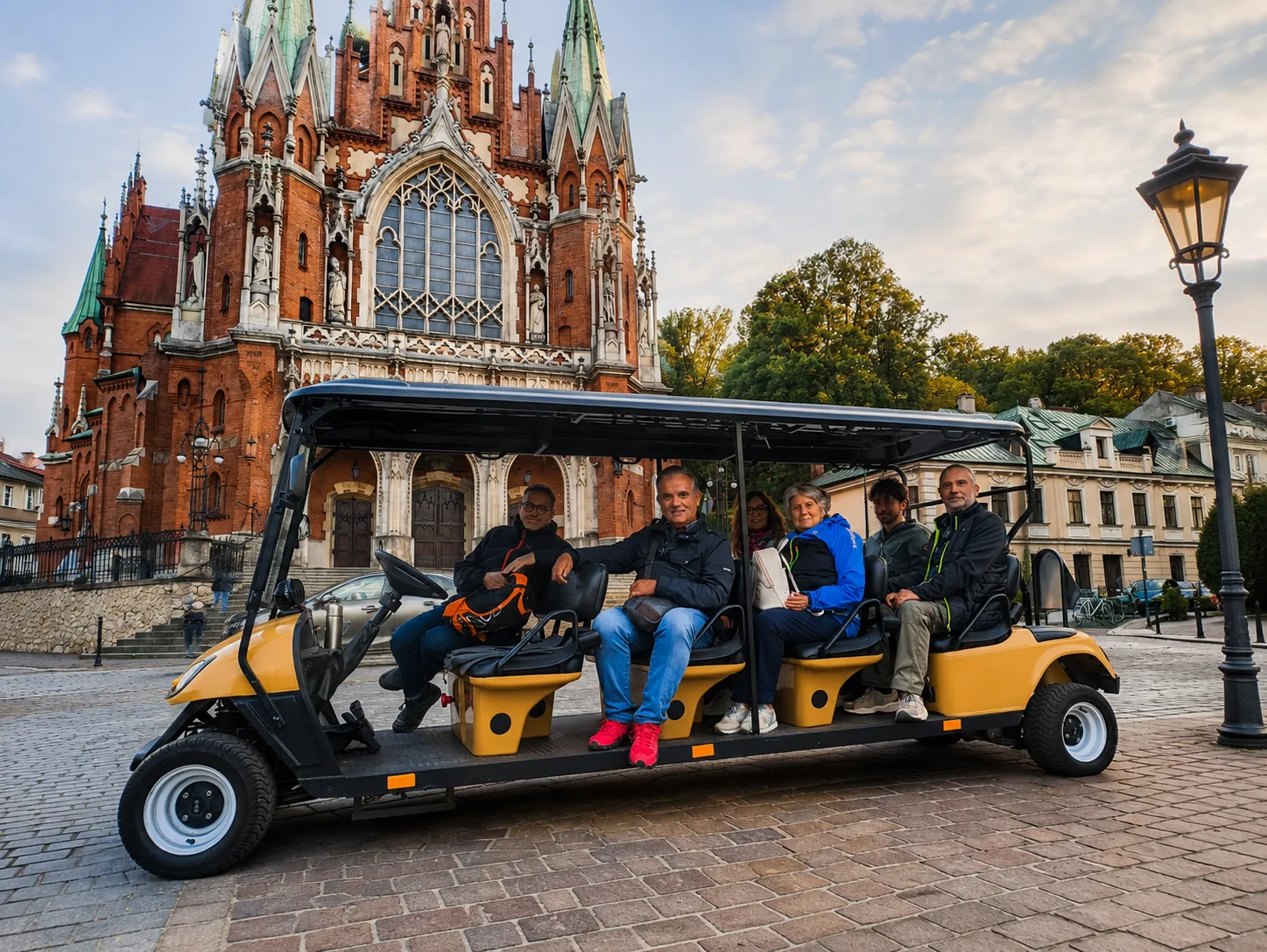
From the Main Square it is a 15 to 20 minute walk along Starowiślna or Stradomska. Trams stop at Miodowa and Plac Wolnica. If you would rather cover the district without the footwork, our Kazimierz electric cart tour loops past the main sights with live commentary.
Etiquette
The Remuh Synagogue is an active house of prayer and its cemetery is a religious site. Dress modestly, keep your voice low, and note that men may be asked to cover their heads; paper kippot are usually available at the entrance. Photography rules differ from site to site, so ask before taking pictures indoors.
Frequently asked questions
Is Kazimierz the same as the Krakow Ghetto?
No. Kazimierz was the historic Jewish town within Krakow. The ghetto created by the Nazi German occupiers existed from March 1941 to March 1943 in Podgórze, on the opposite bank of the Vistula.
How many synagogues are there in Kazimierz?
Seven historic synagogues survive: the Old Synagogue, Remuh, Isaac, Tempel, High, Popper and Kupa synagogues. Several are museums or cultural venues, while Remuh remains an active house of prayer.
How much time do you need in Kazimierz?
Half a day covers Szeroka Street, one or two synagogues and the Remuh cemetery at a comfortable pace. A full day lets you add the churches, Plac Nowy and a meal in the district.
When is the Jewish Culture Festival?
The festival usually takes place in summer, most often in late June and early July. Dates and venues change each year, so check the official festival programme when planning.
Is Kazimierz worth visiting in the evening?
Yes. The district has one of Krakow's best concentrations of restaurants, cafes and bars, especially around Plac Nowy, and Szeroka Street is atmospheric after dark.
Other places worth seeing
Ready to explore?
Book a tour, hop on an electric cart, or arrange a transfer.