Cricoteka in Krakow: tickets, opening hours and the building
The centre for Tadeusz Kantor's art fills a former municipal power station joined to a new building, with his costumes, objects, drawings and archive.
31 min walk from the Main Market SquareDirections
Cricoteka in Krakow keeps the whole legacy of Tadeusz Kantor, the theatre director and painter, on Nadwiślańska Street in Podgórze, about 250 m in a straight line from Heroes of the Ghetto Square. Its full Polish name is Ośrodek Dokumentacji Sztuki Tadeusza Kantora CRICOTEKA, and its former power station and new building hold a museum, an archive, a gallery and a research centre. The exhibitions need a ticket, and entry is free on Wednesdays.
- Address: Nadwiślańska 2-4, 30-527 Krakow.
- Opening hours: Tuesday to Sunday, 11:00-19:00; last entry 18:45 (as listed in October 2026).
- Tickets: standard ticket 25 PLN; free entry on Wednesdays (as listed in October 2026).
- Getting there: stops Korona (tram and bus) and Plac Bohaterów Getta (tram); there is no car park for visitors.
- Accessibility: assistance, Polish Sign Language interpretation or audio description on request.
Cricoteka tickets and opening hours
As listed in October 2026, Cricoteka on Nadwiślańska Street is open from Tuesday to Sunday, 11:00-19:00. Last entry is a quarter of an hour before closing, at 18:45. Until the end of 2026 it is also closed to visitors from 24 to 26 December and on 31 December.
A standard ticket costs 25 PLN, and entry is free on Wednesdays. Holders of the Karta Krakowska, the city's card for residents of Krakow, pay the reduced price instead of the standard ticket price for exhibitions. Cricoteka also runs guided tours, which must be booked at least a week before the visit.
Hours and prices change; check the current details on the Cricoteka website before your visit.
What to see at Cricoteka: Kantor. Terapia widzeń
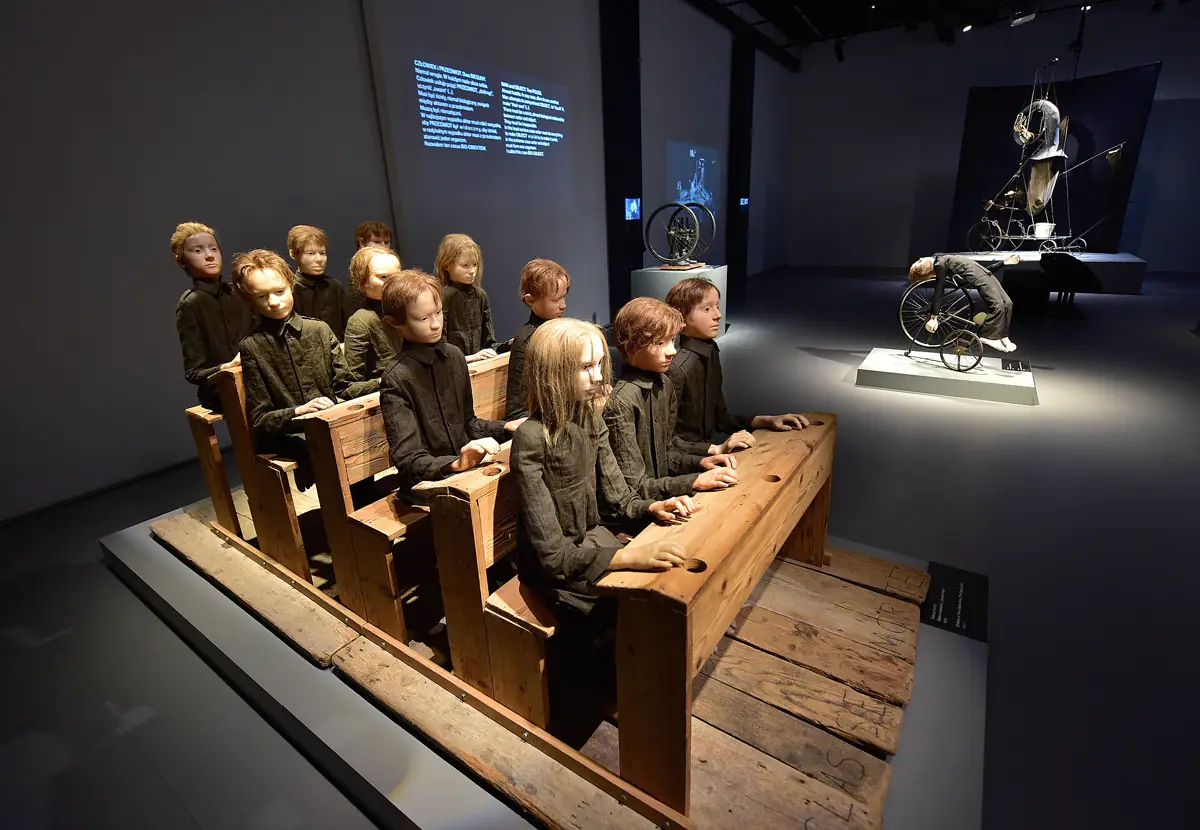
The collection exhibition Kantor. Terapia widzeń shows Kantor's works and archive material next to works by an international group of artists. It has six parts and is arranged neither by date nor by genre. Paintings, drawings, stage objects, photographs of performances and happenings, films and archive documents form temporary constellations.
The chief curator is Jarosław Suchan, invited by Cricoteka. A programme of performances, curated by Anna Bargiel, Wiktor Bury and Kamil Kuitkowski, is an integral part of the exhibition.
The museum keeps and shows several hundred objects and costumes from performances of the Cricot 2 Theatre. The wider collection also includes sculptures linked with the stage works, drawings and sketches, paintings, manuscripts, letters, and photographic, audiovisual and sound material. It also holds art by artists who identify with Kantor's ideas or draw inspiration from them.
The museum of Tadeusz Kantor (Muzeum Tadeusza Kantora) is an internal unit of Cricoteka, set up by a decision of the Minister of Culture and National Heritage in 2018. Cricoteka describes it as the only public museum in Poland devoted to keeping and promoting Kantor's art. The institution also holds concerts, performances, film screenings and classes for children and adults.
The Cricoteka building: power station and table
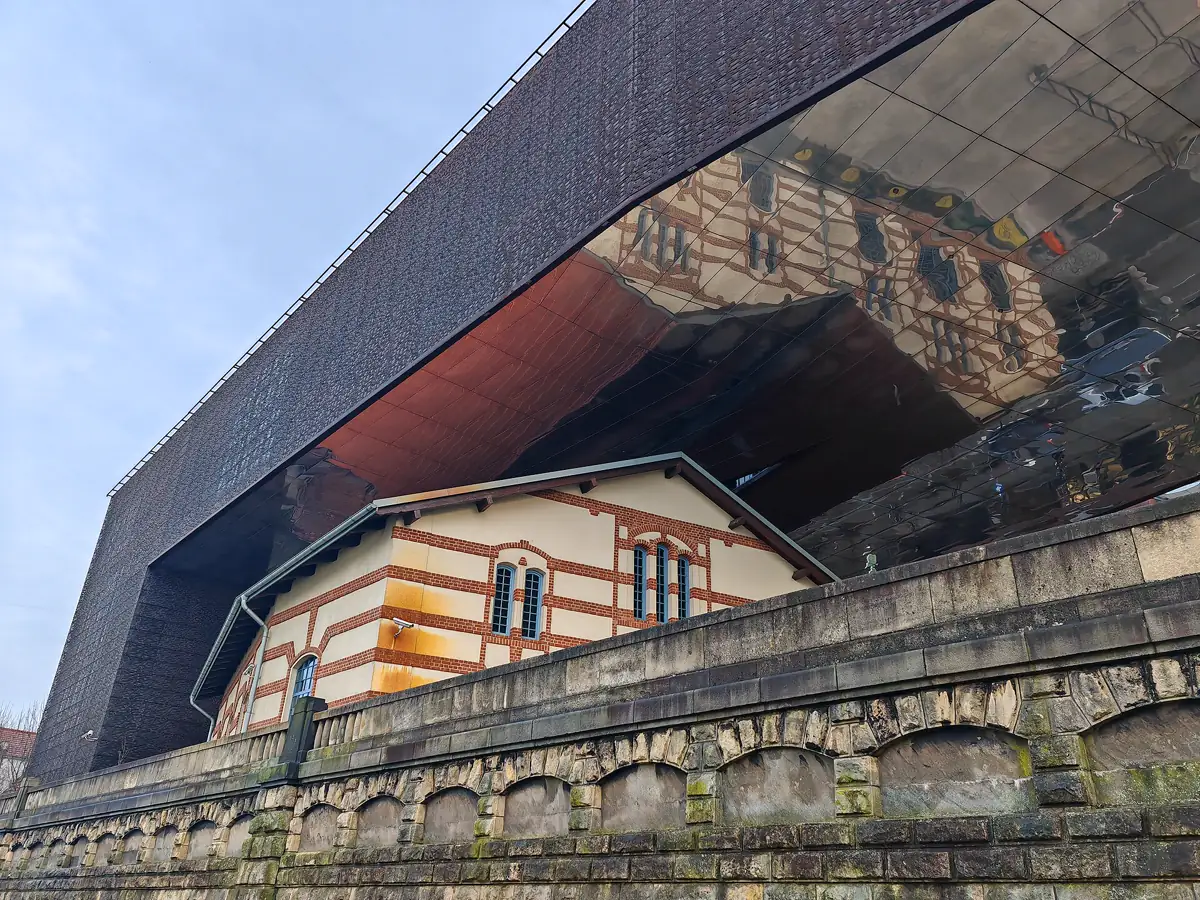
The seat of Cricoteka joins two buildings: a historic power station and a modern structure. A municipal power station worked in the old building from 1900. After it closed, the building had various uses, among them a lodging and bath house for homeless people and a medical clinic.
The old power station now holds the offices, the archive and a theatre hall. The new part has the exhibition space, an education space and a café, and an underground hall links the two buildings.
The design of the new part refers to Kantor's drawing Człowiek ze stołem, and the new part is meant to resemble a table. It also refers to his ideas of wrapping (emballage) and of monuments of impossible architecture. The concept won an award for its attempt to build a public space that is a stage and an audience at the same time. As in Kantor's theatre, the line between actor and spectator disappears in that space.
Tadeusz Kantor and the living archive of Cricot 2
Tadeusz Kantor was born in 1915 in Wielopole Skrzyńskie and died in 1990 in Krakow. He was a director, painter, draughtsman, art theorist, stage designer and creator of happenings, and a graduate of the Academy of Fine Arts in Krakow. During the German occupation he created the Podziemny Teatr Niezależny, an underground independent theatre.
In 1955 Kantor founded the Cricot 2 Theatre with Maria Jarema and Kazimierz Mikulski. A turning point was his Teatr Śmierci (theatre of death), which began with the performance Umarła klasa (1975). His later performances, based on his memories, include Wielopole, Wielopole, Niech sczezną artyści, Nigdy tu już nie powrócę and Dziś są moje urodziny.
Cricoteka was founded in Krakow in 1980 on Kantor's initiative as a living archive of the Cricot 2 Theatre. At first it worked as the Cricot 2 Theatre Centre on Kanonicza Street, at number 5. Cricoteka says that it was created to keep the artist's ideas "not in a dead library system, but in the minds and imagination of the next generations". The new seat on Nadwiślańska Street opened on 12 September 2014 and brought all of Kantor's legacy together in one place.
Cricoteka also cares for the Galeria-Pracownia Tadeusza Kantora on Sienna Street, at number 7/5, the flat and studio where Kantor made his last works in 1987-1990. In line with his wishes, the flat has been open to visitors since 1995, and his room keeps its original furnishings.
Getting to Nadwiślańska Street: stops and parking
The nearest stops are Korona, for trams and buses, and Plac Bohaterów Getta, for trams. Cricoteka has no car park for visitors, and a paid parking zone covers the area around the building. Two parking spaces for people with disabilities are on Nadwiślańska Street, near the entrance on the side of the Father Bernatek Footbridge. A high kerb there can make it harder to get out of a car.
At the exhibition you can ask for assistance, Polish Sign Language interpretation or audio description, and arrange a preparatory visit in advance through the accessibility coordinator. Cricoteka belongs to the Małopolska scheme that recommends places friendly to cyclists.
Eagle Pharmacy and the Father Bernatek Footbridge nearby
Distances below are measured in a straight line. The Eagle Pharmacy is about 250 m from Cricoteka, and the Father Bernatek Footbridge is about 300 m away. The Starmach Gallery in the former Zucker Prayer House is about 350 m away.
Cricoteka: questions visitors ask
What is Cricoteka in Krakow?
A cultural institution of the Małopolska Region devoted to Tadeusz Kantor. Cricoteka calls itself a hybrid institution that brings together a museum, an archive, a research centre, a gallery of contemporary art and a space for cultural events.
Is there a café at Cricoteka?
Yes. The café is in the new part of the building, which also holds the exhibition and education spaces.
Who designed the Cricoteka building?
The IQ2 Konsorcjum from Krakow prepared the concept: Stanisław Deńko of Wizja, and Piotr Nawara and Agnieszka Szultk of nsMoonStudio.
Where is the entrance to Cricoteka?
On Nadwiślańska Street in Podgórze. One of its entrances faces the Father Bernatek Footbridge.
Photo: Jakub Hałun, Wikimedia Commons, CC BY-SA 4.0, cropped.
Other places worth seeing
Ready to explore?
Book a tour, hop on an electric cart, or arrange a transfer.