Kanonicza Street in Krakow: canons' houses and museums
A street whose houses mostly belonged to the canons of Wawel Cathedral, with the palace of Bishop Erazm Ciołek at No. 17 and the Archdiocesan Museum at Nos. 19-21.
9 min walk from the Main Market SquareDirections
Kanonicza Street in Krakow (ulica Kanonicza) leads straight to Wawel: it runs parallel to Grodzka Street, from Senacka Street to Podzamcze, and takes you to the main entrance of Wawel Royal Castle. Most of its houses once belonged to canons, members of the college of clergy at Wawel Cathedral. It is a public street in the Old Town, so you can walk along it at any time; there is no ticket.
- Address: Kanonicza Street, Krakow.
- Museum: the Ciołek branch of the National Museum in Krakow at No. 17 and the Archdiocesan Museum at Nos. 19-21.
- Getting there: for No. 17, the National Museum lists the tram stops Wawel and Plac Wszystkich Świętych (as listed in October 2026).
What to see on Kanonicza Street
Kanonicza is the best-preserved historic street of old Krakow, according to the city authorities. Its houses retain medieval fragments, but their façades come from different periods. Many Renaissance and Baroque houses and palaces survive, with decorative portals at the front and galleries and loggias in their courtyards. Halfway along the eastern side lies St Mary Magdalene Square (plac św. Marii Magdaleny), where a church once stood.
No. 1 is the former 16th-century palace of Bishop Samuel Maciejowski, with a Baroque portal decorated with herms, pillars topped by carved heads. The Pod Trzema Koronami house at No. 7 is one of the oldest surviving houses on the street, and a window in a stone frame on its ground floor remains from the medieval building.
The palace of Bishop Florian z Mokrska at No. 18 dates from the second half of the 14th century and was rebuilt in Renaissance style. Kamienica Dziekańska (the House of the Deans) at No. 21, a Renaissance residence of the deans of the Krakow chapter, has sgraffito, a decoration scratched into layers of plaster, on its façade.
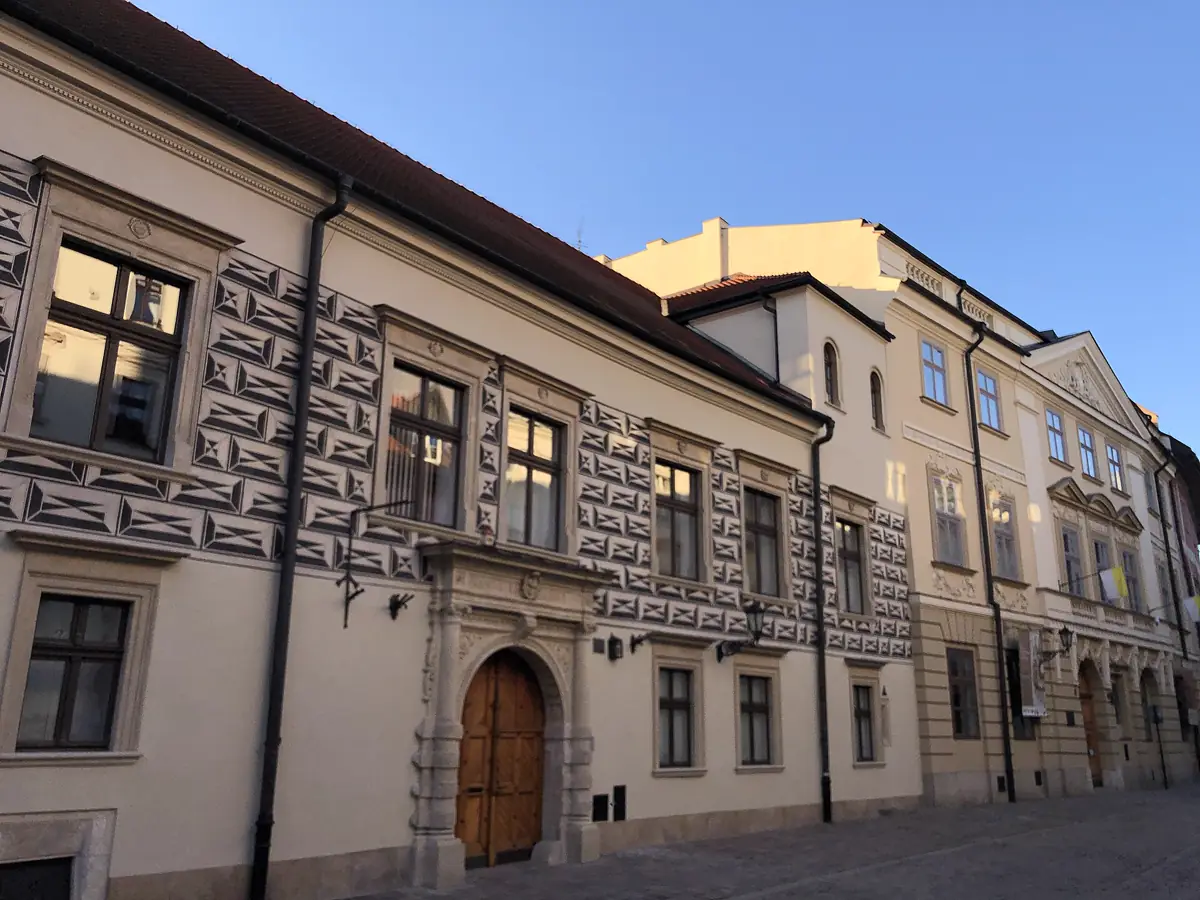
The House of Jan Długosz at No. 25 stands at the Wawel end of the street. It dates from the 14th century, when it housed a royal bathhouse. In the 15th century the canon Jan Długosz lived in the house and wrote the Chronicles of the Famous Kingdom of Poland there.
Erazm Ciołek Palace at No. 17
The palace at No. 17 was built in 1501-1503 for Erazm Ciołek, Bishop of Płock and secretary to King Aleksander Jagiellończyk. It was created by joining two houses and retains its Gothic and Renaissance character: pillars in the entrance hall show Gothic features, and the main portal shows the influence of the Italian Renaissance.
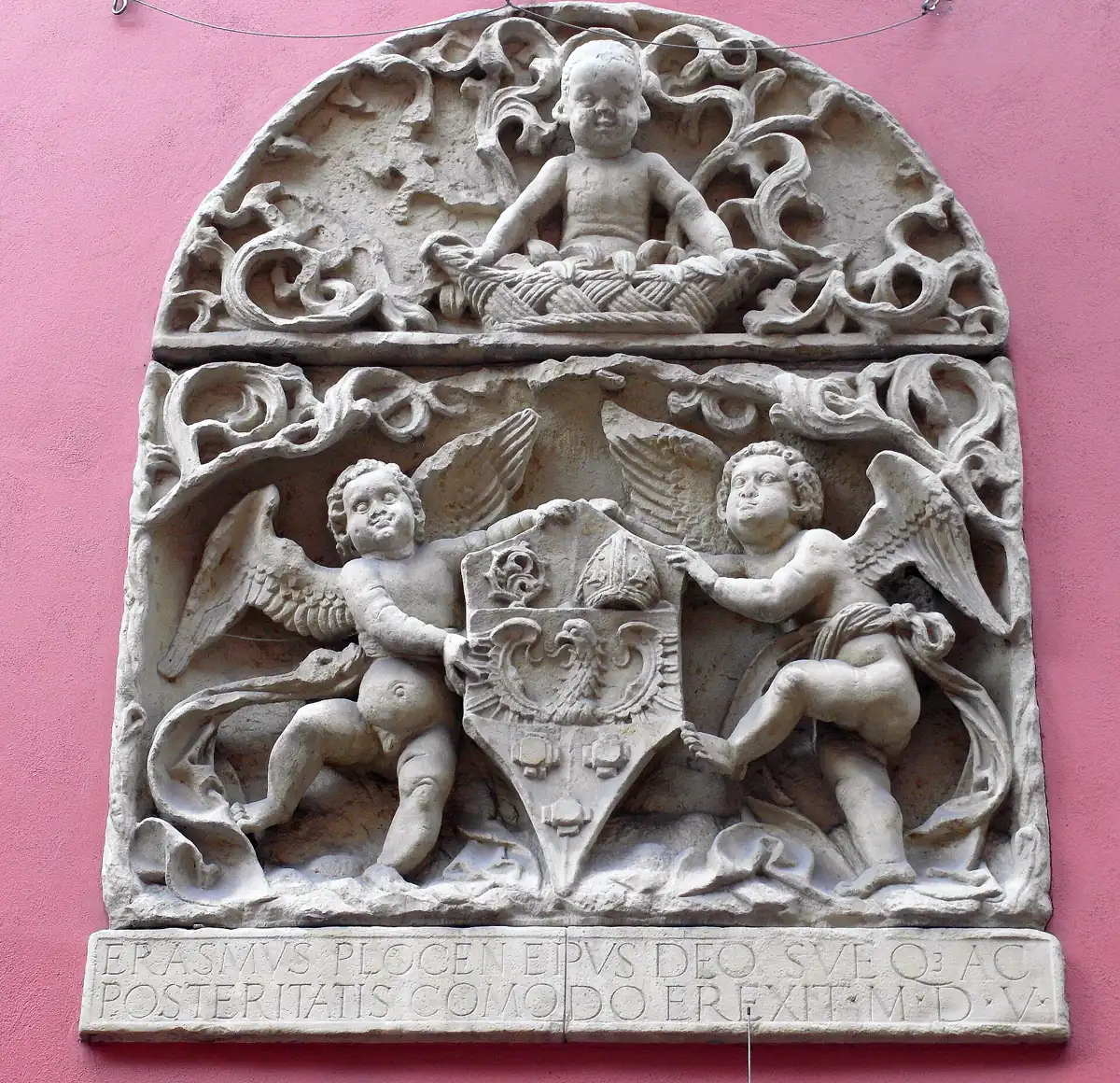
In 1996 the palace was given to the National Museum in Krakow, which opened two permanent galleries there in 2007. The collections bring together Polish art from the Middle Ages to the early modern period, Orthodox icons and about 800 pieces of architectural sculpture from Poland.
Karol Wojtyła's room in the Archdiocesan Museum
The Archdiocesan Museum of Cardinal Karol Wojtyła (Muzeum Archidiecezjalne Kardynała Karola Wojtyły) occupies two heritage houses at Kanonicza 19-21. Father Karol Wojtyła, later Pope John Paul II, lived in one of them. His books, sports equipment, clothes, bed and desk are kept in a small, modest square room with a window onto the courtyard. In this room he received guests and students and wrote his habilitation thesis, a post-doctoral thesis in the Polish academic system.
The museum also has exhibition rooms with collections of sacred art.
History of Kanonicza Street
The history of the houses on the street goes back to the 14th century, according to the city authorities. The street was part of the old settlement of Okół, which was joined to the city in 1401, and its original name was Grodzka. It was also once part of the royal route (Droga Królewska).
In 1455 a fire destroyed many Gothic houses on the street. They were repaired and rebuilt in late Gothic and Italian Renaissance styles. After Poland lost its independence, the authorities placed government institutions in most of the palaces, and the street and its damaged buildings were restored only after 1866.
How to get to Kanonicza Street
For the palace at No. 17, the National Museum lists the tram stops Wawel and Plac Wszystkich Świętych (as listed in October 2026). As listed in October 2026, the museum's Ciołek branch is closed on Mondays, and tickets for its exhibitions can be bought online. Current visiting arrangements for the branch are listed on the National Museum in Krakow website.
Around the street: St Andrew's Church and Wawel Cathedral
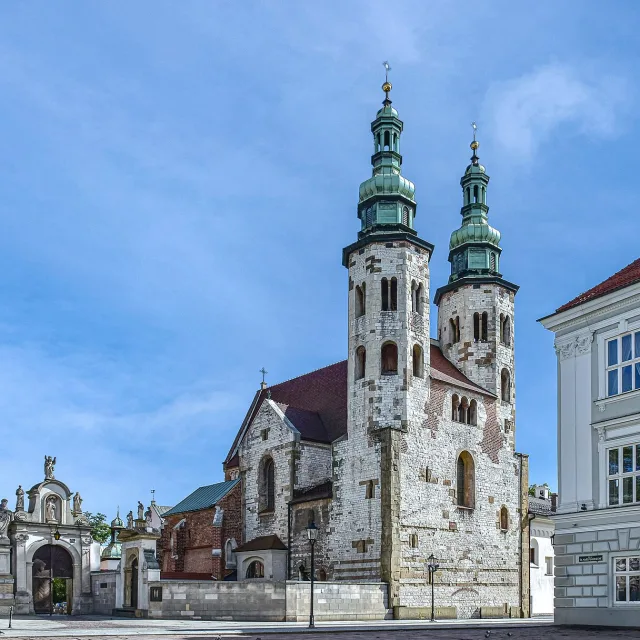
In a straight line, St Andrew's Church is about 100 m from Kanonicza Street, and the Church of Saints Peter and Paul is about 150 m away. The Pod Temidą milk bar is also about 150 m away, and Wawel Cathedral is about 200 m away.
Kanonicza Street: questions visitors ask
Where is Kanonicza Street in Krakow?
In the Old Town, running from Senacka Street to Podzamcze at the foot of Wawel Hill.
Which museums are on Kanonicza Street?
The palace at No. 17 is the Ciołek branch of the National Museum in Krakow, and the Archdiocesan Museum of Cardinal Karol Wojtyła is at Nos. 19-21.
How do I get to Kanonicza Street?
By tram. The National Museum gives Wawel and Plac Wszystkich Świętych as the stops for its branch at No. 17 (as listed in October 2026).
Photo: Radosław Botev, Wikimedia Commons, CC BY 3.0 pl, cropped.
Other places worth seeing
Ready to explore?
Book a tour, hop on an electric cart, or arrange a transfer.