Podgórze Market Square in Krakow: town hall and old inns
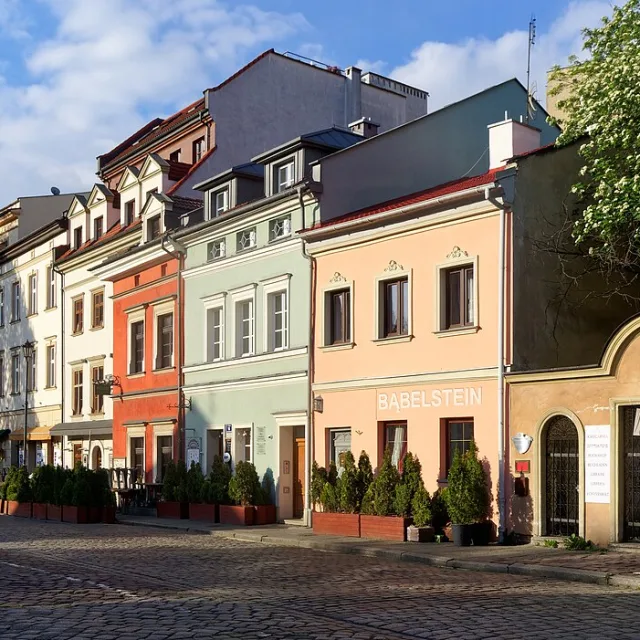
The square of a town that received town rights from the Austrian authorities in 1784, with its town hall at No. 1 and the house Pod Czarnym Orłem at No. 13.
33 min walk from the Main Market SquareDirections
Podgórze Market Square in Krakow (Rynek Podgórski) was laid out at the foot of Lasota Hill as the central square of the town of Podgórze, and it narrows towards St Joseph's Church. Podgórze is now a district of Krakow on the right bank of the Vistula. The square is a public space, so you can walk across it at any time; there is no ticket.
What to see on Podgórze Market Square
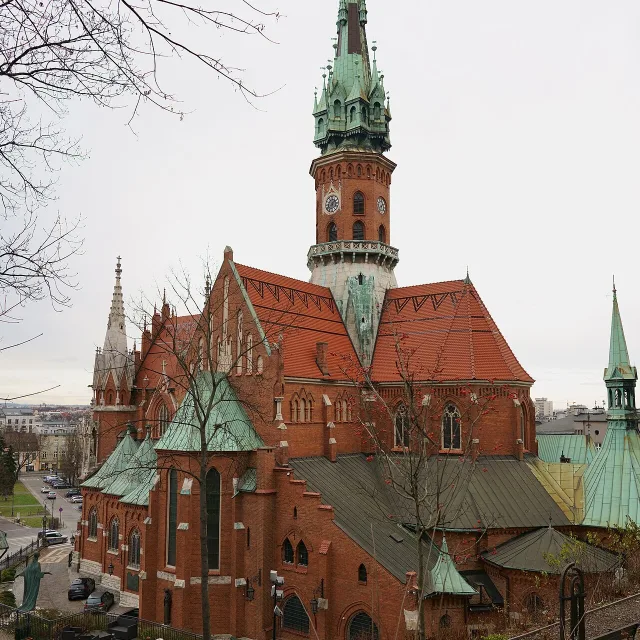
The square has the shape of a trapezoid, and the neo-Gothic St Joseph's Church, built in 1905-1909 to a design by Jan Sas-Zubrzycki, dominates it. The oldest part of the square is the compact row of houses on its north-western side, according to the city authorities; the National Institute of Cultural Heritage calls it the northern side.
The eastern side, with the new town hall at No. 1 on its northern corner, was built only in the middle of the 19th century. The town hall has a richly decorated façade in a style that is mainly historicism with neo-Baroque elements. In 2015 the National Institute of Cultural Heritage recorded that the original fittings of the Podgórze Town Council chamber survived inside.
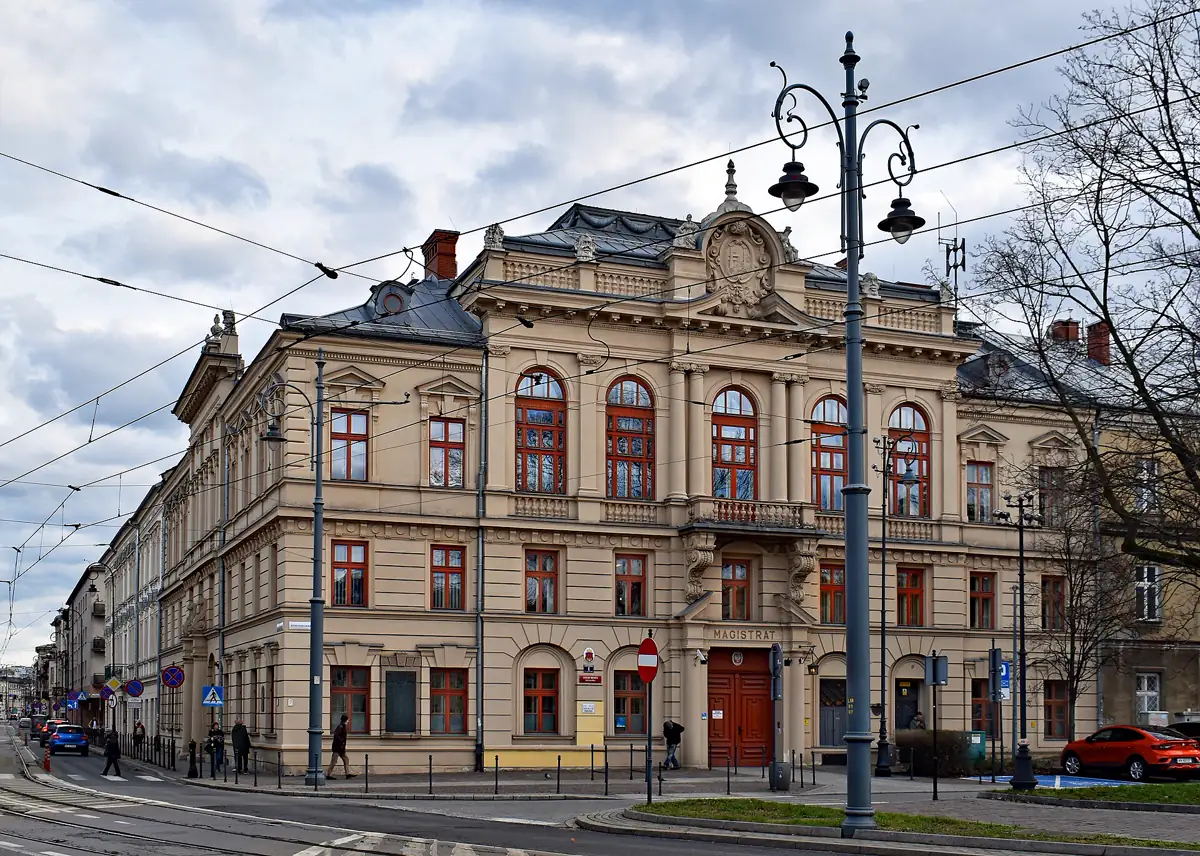
The coat of arms of Podgórze, granted in 1808, survives at the top of the town hall façade facing the square. In the 20th century it was replaced by the inscription "PZPR" and later by the state emblem, and it was restored in 1996.
The house Pod Czarnym Orłem at No. 13
The house Pod Czarnym Orłem (Under the Black Eagle) at No. 13 is one of the oldest buildings in Podgórze, from the 18th century. It stood before 1784 and was adapted as the first town hall of Podgórze, but the town office soon moved to No. 14, the so-called Old Town Hall.
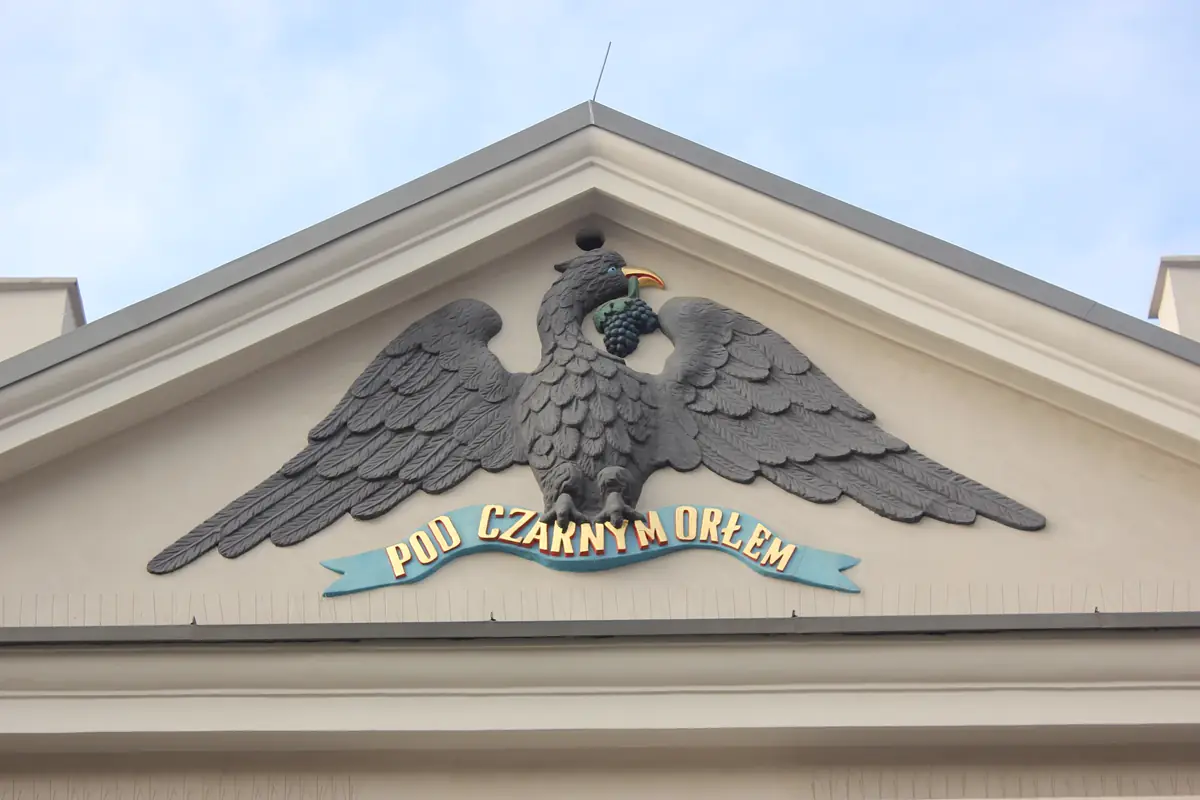
The house retains its original shape, a mansard roof of the so-called Polish type and an eagle in its triangular pediment. The inscription above the entrance first read "Pod Czarnym Orłem", and in the 20th century it was changed to "Pod Orłem".
Later the house was a popular inn and wine bar, and its wide gate, through which merchants' wagons drove into the yard, still shows this. In the 19th century an omnibus left from in front of the inn three times a day for the spa at Swoszowice.
During the German occupation the house lay within the boundaries of the ghetto. The Germans created the ghetto for the Jews of Krakow in 1941 in the part of Podgórze around today's Heroes of the Ghetto Square, and they liquidated it on 13 and 14 March 1943.
History of Podgórze Market Square
The square stands where roads already important in the Middle Ages met, leading to Wieliczka (the salt road), to Krakow and towards Kalwaria Zebrzydowska. After the First Partition of Poland (1772), the Vistula became the border between Poland and Austria, and Podgórze was on the Austrian side.
Podgórze, until then a suburb of Kazimierz, received town rights from the Austrian authorities in 1784, when Emperor Józef II (Joseph II) issued a decree. The city authorities describe Podgórze as an independent town from 1784 until 1915. The parish of St Joseph records that in 1809-1815 Podgórze was joined to Krakow as its Fourth District.
In 1832 the first St Joseph's Church was built, and the market square began to take shape around it. The town hall received an extra storey in 1892.
Podgórze grew as a thriving, independent urban centre and joined Krakow reluctantly. At the turn of the 19th and 20th centuries its residents protested strongly against the plan to include the town in Greater Krakow. Podgórze was merged with Krakow on 1 July 1915, and the town hall lost its original function.
Entering the town hall and No. 13 on Podgórze Market Square
In 2015 the Architecture Department of Krakow City Office worked in the former town hall, according to a description by the National Institute of Cultural Heritage. The building could then be entered during office hours, with restrictions and only in selected parts.
No. 13 was then a private building, closed to visitors, and only the ground-floor rooms could be entered while the shops were open, the same source says. The City of Krakow describes the square on its official website.
Near the square: Starmach Gallery and Bednarski Park
In a straight line, St Joseph's Church is about 100 m from Podgórze Market Square, and the Starmach Gallery in the former Zucker Prayer House is about 150 m away. Bednarski Park is about 250 m away, and the Father Bernatek Footbridge is about 300 m away.
Podgórze Market Square: questions visitors ask
Where is Podgórze Market Square?
At the foot of Lasota Hill, on the right bank of the Vistula, with its narrow end facing St Joseph's Church.
Can you go inside the Podgórze town hall?
Only in part. In 2015 the National Institute of Cultural Heritage described entry as possible during office hours, with restrictions and only to selected parts of the building.
What does the coat of arms on the Podgórze town hall show?
Two columns that refer to the Pillars of Hercules, with which the ancient hero was said to mark the edges of the world. Beside them stands a naked, bearded man with a stick or an oar.
Photo: Mach240390, Wikimedia Commons, CC BY 3.0, cropped.
Other places worth seeing
Ready to explore?
Book a tour, hop on an electric cart, or arrange a transfer.