Szeroka Street in Krakow: three synagogues and a memorial
From the early 17th century the centre of the Jewish town in Kazimierz, with houses from the 16th to the 18th century and a memorial boulder on its green.
20 min walk from the Main Market SquareDirections
Three synagogues stand on Szeroka Street in Krakow, which is in fact an elongated square lined with old houses from the 16th, 17th and 18th centuries. From the early 17th century it was the centre of the Jewish town in Kazimierz. The street is a public space, so you can walk along it at any time; there is no ticket.
What stands on Szeroka Street today
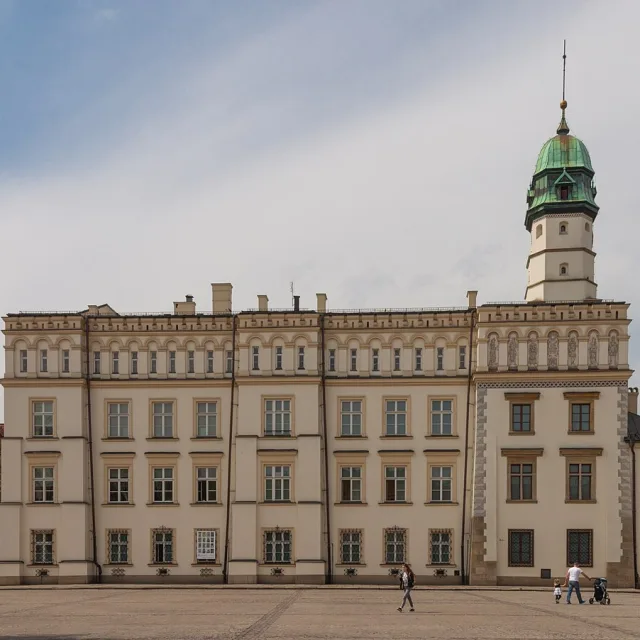
The Old Synagogue at Szeroka 24 houses a branch of the Museum of Krakow with an exhibition on the history and culture of Krakow's Jews. The city authorities call it the most valuable of the synagogues on the street and the oldest Jewish building in Poland. Until the outbreak of the Second World War it was the centre of Jewish religious life in Krakow, according to the Jewish Religious Community in Krakow.
The Remuh Synagogue at Szeroka 40 was built around 1558 in the Renaissance style. Today it is the main synagogue of the Jewish Religious Community in Krakow, with daily and holiday prayers. The Popper Synagogue, founded in 1620 by Wolf Popper (Wolf Bocian), stands behind the house at Szeroka 16. A gate built during its renovation in 1827 still separates its courtyard from the street. The synagogue now houses the Austeria bookshop.
The Landau house at No. 2, from the end of the 18th century, closes the northern side of the square. The city authorities say that it is wrongly taken for the manor of the Jordan family, which stood until the 18th century near today's Plac Nowy. Helena Rubinstein (Chaja Rubinstein), a cosmetics entrepreneur and one of the richest women of her time, was born in the house at No. 14.
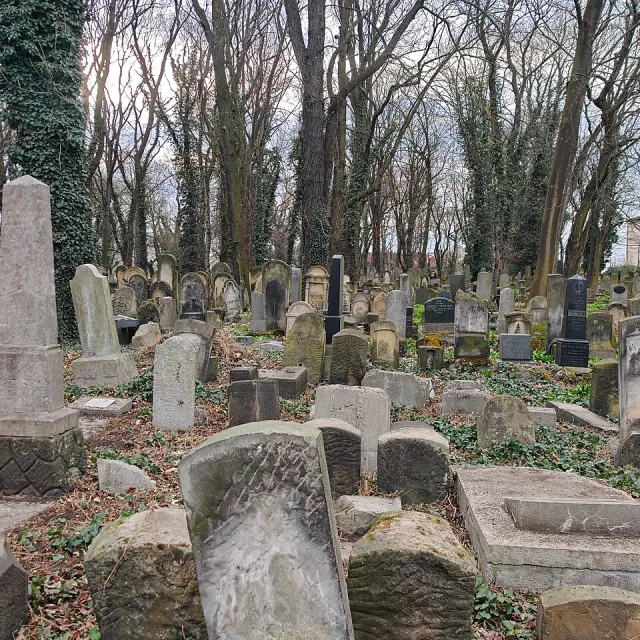
On the green opposite the Remuh Synagogue, a small walled cemetery existed until the war. The city authorities give a legend and several theories about who was buried there.
The memorial boulder and the Jan Karski bench
After the war, a memorial in the form of a boulder with a plaque was placed on the green. According to the city authorities, it commemorates 65 thousand Polish citizens of Jewish origin from Krakow and the surrounding area who were murdered by the German occupiers during the Second World War.
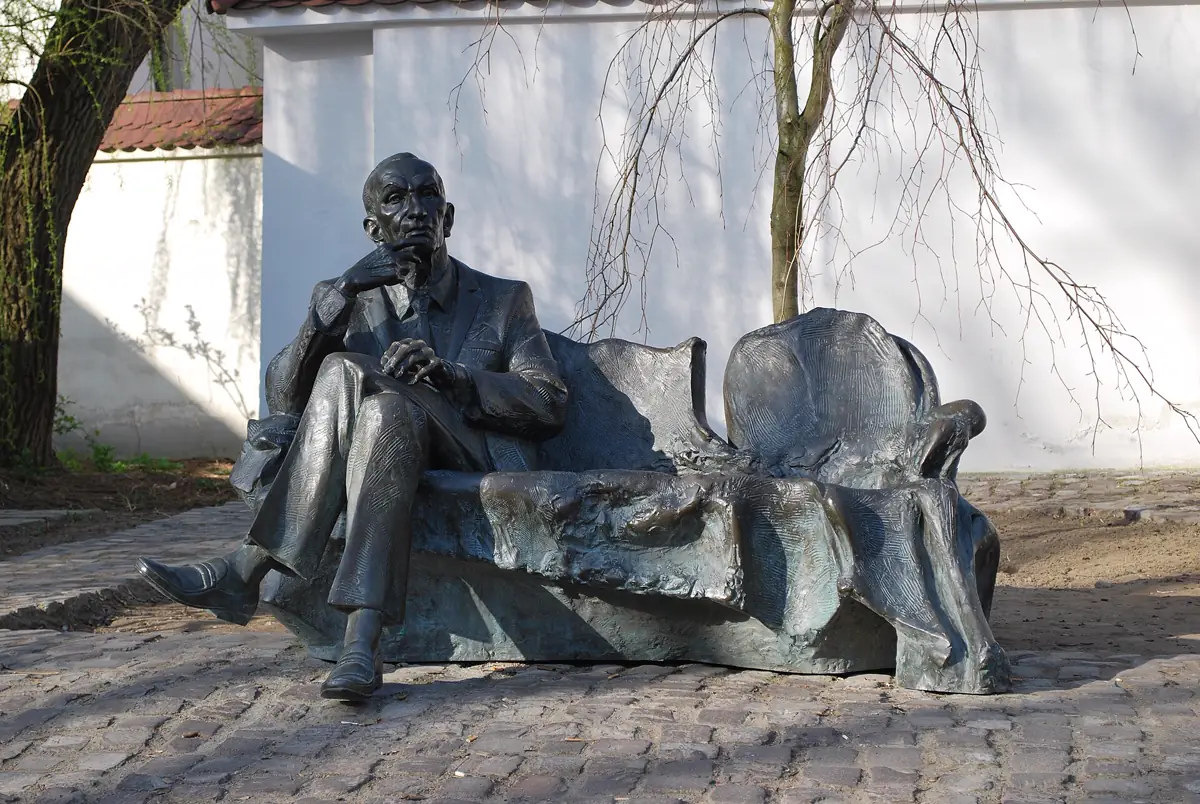
Next to the boulder stands the Jan Karski Bench, a monument in the form of a bench with a figure of Jan Karski. During the German occupation, Karski wrote a report on the situation of the population in occupied Poland, including the Jews, and a report on the Holocaust. He received the title of Righteous Among the Nations.
History of Szeroka Street
King Kazimierz Wielki (Casimir the Great) founded the town of Kazimierz in 1335. In the Middle Ages this area was the centre of the village of Bawół, which became part of Kazimierz after the town was founded, according to the city authorities.
At the end of the 15th century, Krakow's Jews began to settle here after a decree of Jan Olbracht that in practice ordered them to leave Krakow. A Jewish town soon formed, separated from the rest of Kazimierz by internal walls. In the 19th century poor Jewish families lived on Szeroka Street.
During the Second World War, the Germans devastated all of Krakow's synagogues and stripped them of their liturgical furnishings, according to the Jewish Religious Community in Krakow. The Germans turned the Old Synagogue into storehouses and badly devastated the Popper Synagogue. In 1958 the Krakow Congregation of the Mosaic Faith handed the Old Synagogue over for museum use.
Visiting the three synagogues
Entry to the Remuh Synagogue costs a donation of 10 or 20 PLN. It is open from 10:00 to 18:00 in the summer season and from 10:00 to 16:00 in the winter season, and it is closed on Saturdays and Jewish holidays (as listed in October 2026). For visiting details of the Old Synagogue, the Jewish Religious Community refers visitors to the Museum of Krakow.
Our electric cart tour of Kazimierz runs along Szeroka Street. Opening times change; check the current details on the website of the Jewish Religious Community in Krakow before your visit.
Near Szeroka Street: the Remuh and Popper synagogues
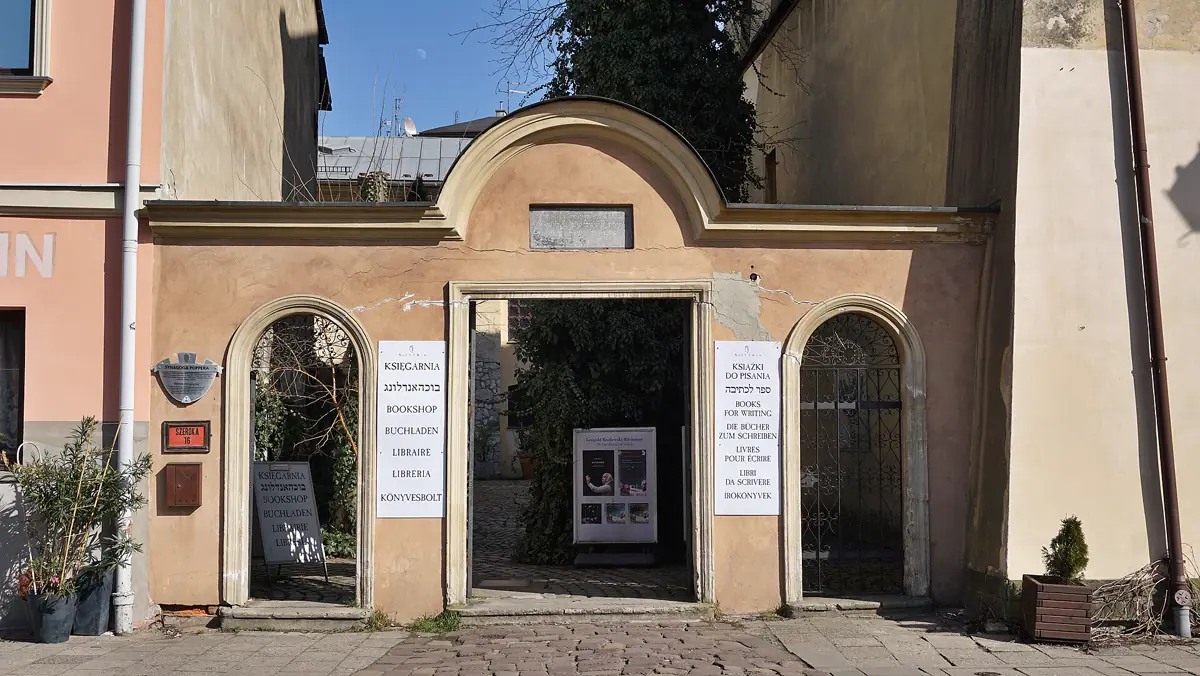
The Popper Synagogue is about 50 m away in a straight line, and so is the Remuh Synagogue and its cemetery. The Jan Karski Bench and the Great Mikveh are each about 100 m away.
Szeroka Street: questions visitors ask
Where is Szeroka Street in Krakow?
In Kazimierz. From the early 17th century it was the centre of the Jewish town there, which was separated from the rest of Kazimierz by internal walls.
What is at Szeroka Street 24 in Krakow?
The Old Synagogue. Today it houses a branch of the Museum of Krakow, with an exhibition on the history and culture of Krakow's Jews.
What is there to see on Szeroka Street?
Three synagogues (the Old, the Remuh and the Popper), houses from the 16th to the 18th century, and the memorial boulder and the Jan Karski Bench on the green.
Photo: Jakub Hałun, Wikimedia Commons, CC BY-SA 4.0, cropped.
Other places worth seeing
Ready to explore?
Book a tour, hop on an electric cart, or arrange a transfer.