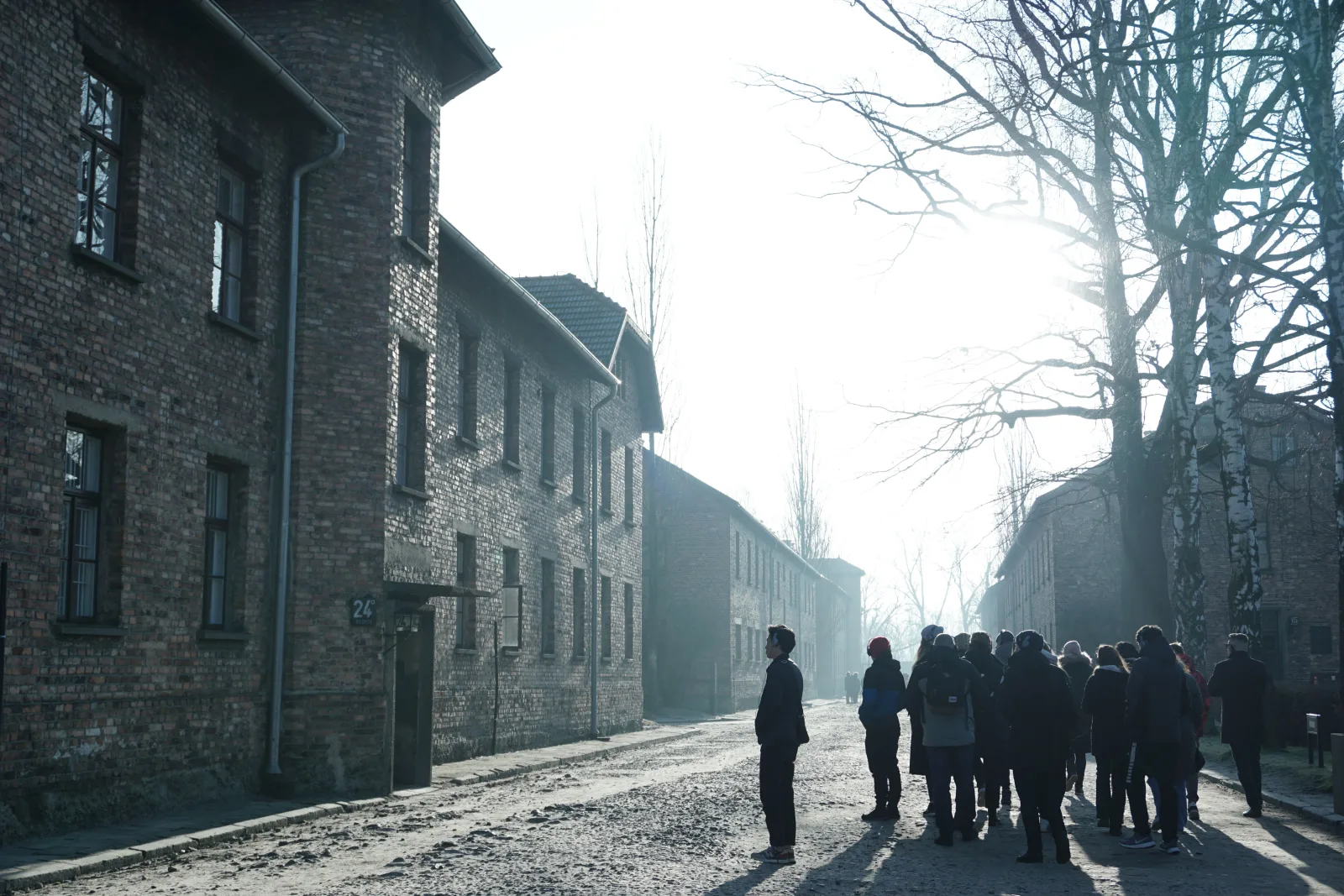
The Auschwitz-Birkenau Memorial and Museum sits in the Polish town of Oswiecim, roughly 66 to 70 km west of Krakow. Admission to the grounds is free, but you cannot simply turn up: you must reserve a personalised entry pass in advance at visit.auschwitz.org, and entry passes are not available at the Museum itself.
There are four ways to make the journey: an organised tour from Krakow, a public bus, a train, or a car. For most visitors the organised door-to-door tour is the simplest, because it bundles the transport, the reserved entry pass and a visit led by a Museum educator into one booking. This guide is about how to get there and plan the day, not whether to go; that separate question is covered in our read on the combined one-day tour.
The short version
The Memorial is about 70 km west of Krakow, roughly 1h15 by car and around 1.5 to 2 hours by public bus or train. Admission is free, but a personalised entry pass booked in advance at visit.auschwitz.org is mandatory, and during daytime hours you can only enter accompanied by a Museum guide-educator. The four ways to get there are an organised tour, a direct bus, a train, or driving yourself.
The name: Oswiecim and Auschwitz-Birkenau
It helps to use the names correctly. Oswiecim is a working Polish town. "Auschwitz" is the German name the Nazis imposed on the town and the camp they built there. The respectful convention is to call the town Oswiecim and the camp and memorial Auschwitz-Birkenau. When you buy a bus or train ticket, your destination is Oswiecim.
The four ways to get there
By organised tour
An organised tour from Krakow is a door-to-door arrangement that combines the transport, the reserved entry pass and a visit led by a Museum educator in a single booking. It typically runs 6 to 7 hours in total, with around 1.5 hours of transfer each way and a guided visit of about 3.5 hours. Some operators also pair Auschwitz with other excursions, which you can compare on our Krakow day trips hub.
Our Auschwitz-Birkenau tour costs 500 PLN per person, with private transport from Kraków, Memorial entry tickets and a visit led by a Museum educator included; prices of shared group tours vary by operator and inclusions.
- Pros: no booking hassle, since the entry pass, timed slot and guide are all arranged; hotel or central pickup; air-conditioned transport; a guide during peak hours; you skip the general queue; and the shuttle between sites is included.
- Cons: more expensive than public transport; a fixed schedule with less flexibility; and a group setting.
By bus
Direct buses run by Lajkonik and regional operators leave from Krakow's MDA bus station on Bosacka Street, whose location is covered in the main Krakow guide. The trip takes about 1.5 hours (the range is 60 to 120 minutes). Fares are approximately 20 to 27 PLN one way, with Lajkonik cited at around 27 PLN as of April 2026 and some regional buses nearer 20 PLN. Prices change, so check before you travel.
- Pros: the cheapest direct option; the buses stop right at the "Oswiecim Muzeum" stop, directly across from the museum entrance and car park, so there is no onward transfer; and Lajkonik's timetable valid from 1 March 2026 lists eight departures a day from the MDA station: from 07:10 to 15:55 between 1 April and 31 October, and from 06:15 to 14:00 between 1 November and 31 March.
- Cons: you must still separately reserve your free entry pass or guided tour online in advance; buses can fill up, so booking ahead is advised; and you handle the timing yourself to match your entry slot.
By train
Trains run from Krakow Glowny to Oswiecim, taking a little over an hour on Koleje Małopolskie regional trains, according to the carrier, with departures around every 30 to 60 minutes. Regional fares are typically low, in the region of 15 to 25 PLN depending on the service.
- Pros: comfortable, frequent, cheap, and it avoids road traffic.
- Cons: Oswiecim railway station is about 1.5 to 2 km from the Museum, not at the entrance. From the station you need a local city bus (lines 0, 2, 3 or 8 to the "Muzeum" stop), a taxi, or a walk of roughly 20 to 25 minutes. This is the least convenient last mile of the do-it-yourself options.
By car
Driving takes about 1h15, or roughly an hour without traffic, mainly via the A4 motorway. Your costs are fuel plus parking: the museum car park is around 20 PLN per car (for up to 8 people), and nearby lots run about 10 to 20 PLN. Parking prices change, so reconfirm on the day.
- Pros: fully flexible timing; door-to-door; and useful if you are combining Auschwitz with other places, such as the day trip compared in Wieliczka Salt Mine or Auschwitz.
- Cons: you still must pre-book the entry pass or guide online; parking can be busy in peak season; and there is the driving and navigation effort.
Booking rules you must know before you go
Entry is free, but the pass is mandatory
Admission to the grounds of the Auschwitz-Birkenau Memorial is free. A fee is only charged for a visit accompanied by a Museum guide-educator. Even for a free self-guided visit, you must still reserve a personalised entry pass in advance. Passes are reserved exclusively at visit.auschwitz.org. The Museum's visitor information states that entry passes cannot be obtained at the Museum itself. Policies can evolve, so confirm this on the official site before you travel.
The guided-only window is wider than most people assume
During the busy part of the day, entry is only possible with a Museum guide-educator. Self-guided individual entry is allowed only from a set afternoon cut-off time until closing. The guided-only window covers essentially the whole morning to mid-afternoon, from the 7:30 opening, not just the middle hours that many visitors expect. The approximate seasonal cut-off times, after which unguided entry begins, are:
- December: guided only 7:30 to 13:00
- January and November: 7:30 to 14:00
- February: 7:30 to 15:00
- March and October: 7:30 to 16:00
- April to September: 7:30 to 17:00
In summer, then, unguided visits are only possible from 17:00 onward, and the last entry is at 18:00 in April, May and September and at 19:00 from June to August, so the unguided window is short all year. These times are set per season and change, so always re-verify the current hours on visit.auschwitz.org before you plan your slot. A standard guide-educator tour costs 150 PLN per person in a foreign language, or 140 PLN reduced, on the Museum price list in force since 2 January 2026 (in Polish it is 140 and 130 PLN; study tours cost more). On an organised tour from Krakow, the guide and entry are bundled into the tour price.
On arrival: two sites and a free shuttle
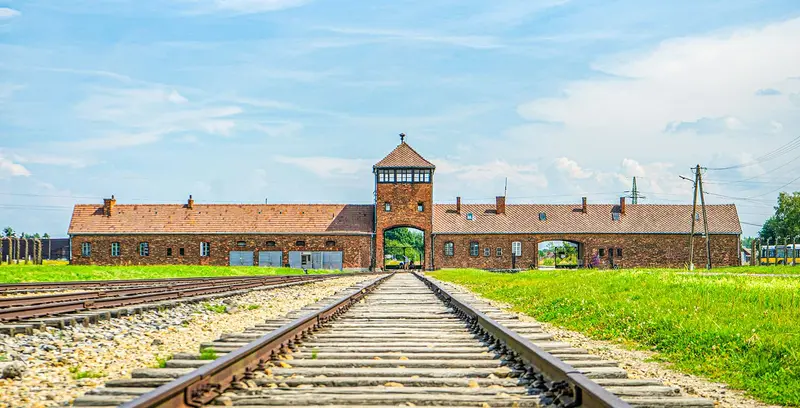
The Memorial has two parts. Auschwitz I is the main camp, with brick blocks and the museum exhibitions, and this is where visits start. Auschwitz II-Birkenau is the far larger extermination camp with the railway gate, 3.5 km away.
A free Museum shuttle bus links the two sites. It is an eight-minute ride, running roughly every 10 minutes from April to October and every 20 minutes from November to March. Guided tours use the shuttle automatically as part of the visit.
How long it takes
The Museum recommends a minimum of about 90 minutes at each site, so allow at least around 3 hours to see both. A standard guided tour lasts approximately 3.5 hours and covers both sites including the shuttle transfer. Realistically, allow 3.5 to 4 hours at the Memorial, plus travel and security time. With roughly 1.5 hours each way from Krakow, a full trip is typically 6 to 7 hours.
Practical points and respectful conduct
This is a place of mourning and genocide remembrance. Please plan and behave accordingly.
- Book well ahead. Reserve your entry pass or guided tour at visit.auschwitz.org in advance. For English-language guided tours in peak season (May to September), the Museum advises reserving at least two months ahead (booking opens 90 days in advance), and weekend mornings sell out first. Availability fluctuates, so confirm on the official booking system.
- Bag size limit. The maximum permitted size for bags or backpacks brought inside is 35 x 25 x 15 cm. Larger luggage can be left in the Museum's own paid luggage lockers (5 PLN per locker, card payment only), in your car or coach, or in paid luggage storage in Kraków.
- Arrive early. Arrive at least 30 minutes before your start time, because of airport-style security checks. If you use public transport, build in buffer time, since bus and train timing is separate from your booking.
- Children. The Museum advises that a visit is not recommended for children under 14, given the difficult and graphic nature of the site.
- Photography. Photography for personal use is generally allowed, but flash and tripods are prohibited, and it is banned entirely in Block 4 (the hair room) and the basements of Block 11. Commercial filming and drones need prior museum approval. Be discreet.
- Dress and behaviour. Dress appropriately and behave with solemnity and respect. Keep quiet in the exhibition areas.
- Clothing for the weather. Wear comfortable shoes. Much of Birkenau is open-air with little shelter, so bring water in summer and warm, waterproof clothing in winter.
Whichever way you travel, reserve your entry pass first, allow generous time, and treat the visit as the act of remembrance it is.
Is entry to Auschwitz free?
Yes. Admission to the grounds of the Auschwitz-Birkenau Memorial is free. You only pay if you take a visit with a Museum guide-educator. Even for a free self-guided visit, you must still reserve a free personalised entry pass in advance at visit.auschwitz.org.
Do you need to book in advance?
Yes. Entry is only possible with a personalised entry pass reserved beforehand at visit.auschwitz.org, and passes cannot be obtained at the Museum itself. In peak season, book English guided tours at least two months ahead, as the Museum advises. An organised door-to-door tour from Krakow handles this booking for you.
Can you visit Auschwitz without a tour or guide?
Yes, but only outside the busy hours. During the daytime guided-only window (for example 7:30 to 17:00 in summer, ending earlier in winter) entry is only with a Museum guide-educator. Self-guided individual visits are permitted from that afternoon cut-off time until closing, still with a pre-booked free entry pass.
How do you get to Auschwitz from Krakow without a tour?
The easiest do-it-yourself option is a direct bus (Lajkonik and regional operators) from Krakow's MDA bus station on Bosacka Street. It takes about 1.5 hours and stops right at the "Oswiecim Muzeum" stop opposite the museum entrance, for around 20 to 27 PLN. Trains from Krakow Glowny take a little over an hour on Koleje Małopolskie regional services, but Oswiecim station is about 1.5 to 2 km from the Museum, needing a local bus, taxi or a walk of around 20 to 25 minutes.
How long does a visit to Auschwitz take?
Allow a minimum of about 90 minutes at each site, Auschwitz I and Birkenau, so at least around 3 hours. A standard guided tour is about 3.5 hours. With roughly 1.5 hours of travel each way from Krakow, a full trip is typically 6 to 7 hours.
Which is better to get there, train or bus?
For most visitors the bus is more convenient, because Lajkonik and regional buses drop you directly at the Museum entrance, whereas the train leaves you about 1.5 to 2 km away at Oswiecim station, requiring an extra local bus, taxi or walk. The train avoids road traffic, but the bus wins on last-mile convenience.
How do you travel between Auschwitz I and Birkenau?
A free Museum shuttle bus runs between the two sites, which are 3.5 km apart. It is an eight-minute ride, roughly every 10 minutes in the warmer months and every 20 minutes in winter. Guided tours include it automatically.
Is Auschwitz suitable for children?
The Museum advises that a visit is not recommended for children under 14, given the difficult and graphic nature of the site.