If you’re planning 4 days in Kraków, this itinerary shows a realistic route for first-time visitors: the Old Town and Wawel, Kraków’s Jewish heritage in Kazimierz and Podgórze, plus two of the city’s most popular day trips-Auschwitz-Birkenau and Wieliczka Salt Mine. You’ll also find practical timing and booking tips so you don’t waste time on the wrong transport or last-minute ticket issues.
We get the same questions every season: how much time you truly need, whether Auschwitz fits as a day trip, and what to reserve first. Use the plan below as a template and adjust meals and museum stops to your pace.
Day 1: Old Town, Wawel and a classic Kraków walk
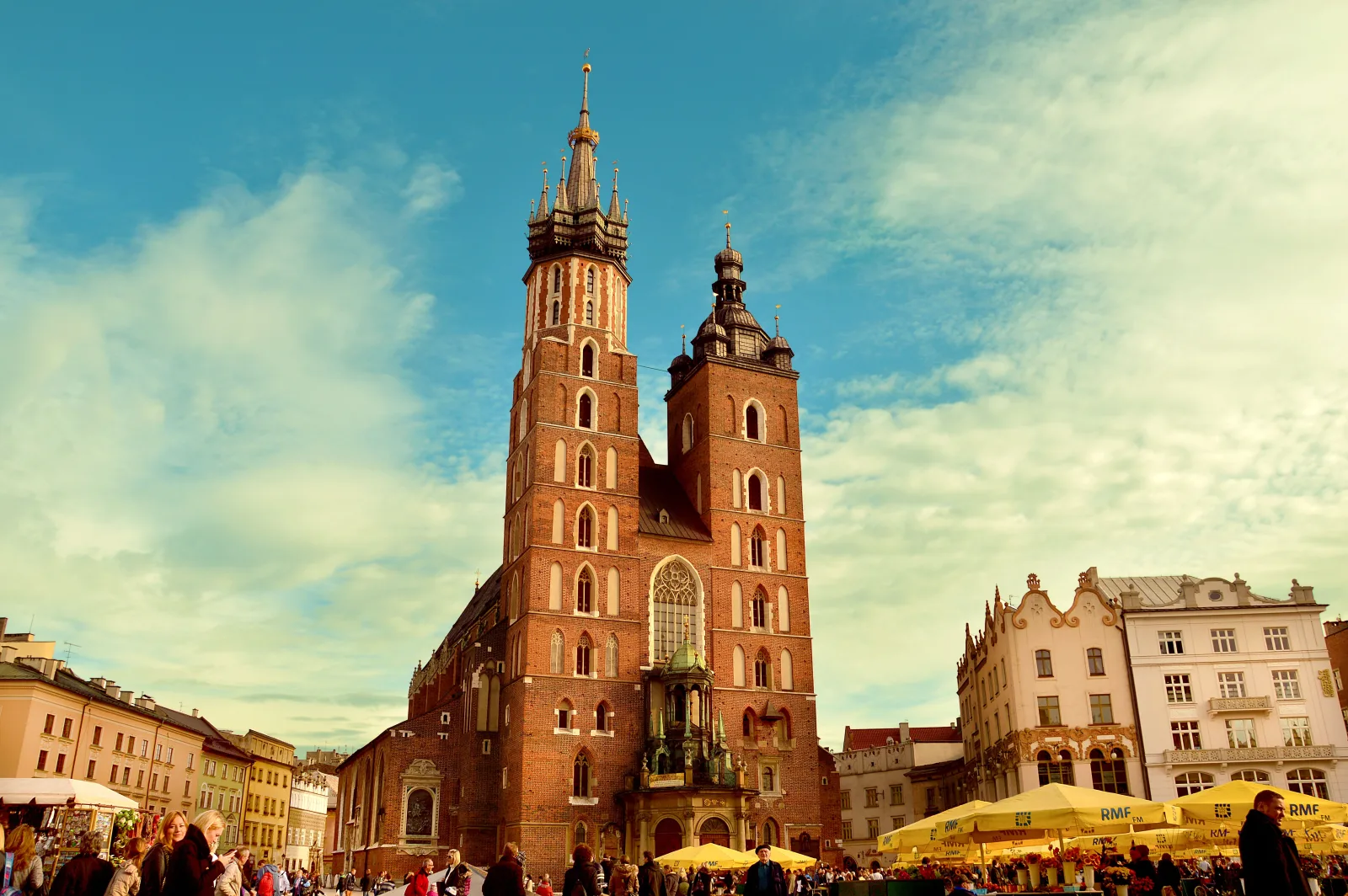
Start in Rynek Główny (Main Market Square). If you’re able to arrive early (around 8:00-9:00), you’ll have better light for photos and fewer groups moving through the center. St. Mary’s Basilica on Plac Mariacki 5 opens to visitors only at 11.30 from Monday to Saturday (the altarpiece is opened at 11.50) and at 14.00 on Sundays and holidays, so see the square first and come back later; tickets cost 20 PLN (reduced 10 PLN) at the visitor point at Plac Mariacki 7. The hourly hejnał trumpet call is one of the easiest “only-in-Kraków” moments to build your day around.
Walk the Cloth Hall area, then head down toward Wawel. The Old Town-to-Wawel route is straightforward on foot and gives you constant views of historic façades and church towers.
Visit Wawel Royal Castle (Wawel 5). Each exhibition has its own timed ticket and a daily limit, so pre-booking helps: online tickets go on sale 4 weeks before the visit date, the ticket office sells them only for the same day, and the cathedral sells its own tickets separately. If you want a coffee break on the way, look around ul. Kanonicza for a quieter pause before you go inside.
Lunch and afternoon plan
For lunch near Wawel, Pod Wawelem Kompania Kuflowa (ul. Św. Gertrudy 26-29) is a common choice for hearty Polish portions. For lighter meals, you can find plenty of options around ul. Grodzka and ul. Poselska.
In the afternoon, use the Planty Park ring to pace yourself between major sights. A practical order is:
- St. Florian’s Gate, then the Barbican (in 2026 the Barbican interior is open from 10 May to 30 October, Tuesday to Sunday, 10.30 to 18.00; outside those dates you see it from the outside)
- Collegium Maius (ul. Jagiellońska 15; individual visits Monday 9:00 to 16:00, Tuesday to Friday 13:30 to 16:00, Saturday 10:00 to 15:00, last entry 30 minutes before closing; it closes early, so on a late start visit it first)
- Short shopping stops around ul. Floriańska and ul. Sławkowska (expect tourist pricing)
If you want an easier introduction to the city layout-especially with kids, mobility needs, or limited time-consider an electric cart tour of Kraków’s Old Town and surrounding districts. It can help you “map” where everything is before you commit to a longer walk.
For dinner, Morskie Oko (Plac Szczepański 8) is reliable for classic Polish dishes, while Szara Gęś (Rynek Główny 17) is a good option if you prefer a more polished setting. End with a stroll around Rynek Główny when the evening crowds thin slightly.
Day 2: Kazimierz, Podgórze and Kraków’s Jewish heritage
Day 2 is built for Kazimierz, the historic Jewish quarter just south of the Old Town. Start at Szeroka Street, where many key buildings cluster. From there, you can visit:
- Old Synagogue (ul. Szeroka 24)
- Remuh Synagogue and cemetery (ul. Szeroka 40)
Kazimierz mornings are often calmer than later in the day, which makes it easier to walk slowly and read the atmosphere. For breakfast, try HEVRE (ul. Beera Meiselsa 18) or look for café options around Plac Nowy.
After Kazimierz, cross toward Podgórze. In March 1941 the Germans set up a ghetto for Kraków's Jews in this district. Key points you can include on foot are Ghetto Heroes Square (Plac Bohaterów Getta), the ghetto wall fragment around ul. Lwowska 25-29, and Oskar Schindler’s Enamel Factory (ul. Lipowa 4). If you plan to visit the museum, book ahead: tickets are personalised, go on sale online 90 days before the visit, and you need an original identity document at the entrance. The museum is closed on the first Tuesday of each month.
If you want the historical context stitched together (instead of visiting sites as separate stops), join our Memory Trail tour (Kazimierz + the former ghetto + Schindler’s Factory). It’s designed for the exact “what am I looking at?” questions that come up when you walk independently.
Where to eat in Kazimierz
Kazimierz makes lunch easy because the area is packed with options. Popular choices include:
- Hamsa (ul. Szeroka 2) for Middle Eastern dishes
- Starka (ul. Józefa 14) for Polish classics
- Zapiekanka (for example from a stall near Plac Nowy) if you want street food
Spend your late afternoon browsing ul. Józefa and ul. Miodowa, then keep the evening flexible-Kazimierz is a good place to do “one more stop” without feeling like you must rush back to the Old Town.
Day 3: Auschwitz-Birkenau day trip
Plan Day 3 around Auschwitz-Birkenau. This isn’t a quick add-on; it’s a full, structured visit that deserves your attention. The Memorial, on the site of the former German Nazi concentration and extermination camp, is in Oświęcim (about 70 km from Kraków); with travel and security checks, expect most of the day to be taken up.
If you’re wondering whether 4 days in Kraków is enough to include it: yes, it works as a day trip if you go with proper timing and the right expectations. It also makes the history you see in Kazimierz and Podgórze feel clearer and more complete.
The easiest option is to book an organized Auschwitz-Birkenau guided day trip from Kraków. It reduces uncertainty about entry, scheduling, and logistics. If you travel independently, reserve a personalised entry pass online at visit.auschwitz.org (bookings open 90 days in advance; there are no passes on site), bring an identity document, arrive at least 30 minutes early for security checks and carry no bag larger than 35x25x15 cm. The two parts of the Memorial are 3.5 km apart and linked by a free Museum shuttle.
Bring water, wear comfortable shoes, and dress in layers. Even when the weather is warm above ground, you’ll spend time outdoors.
What to expect
Auschwitz I and Auschwitz II-Birkenau are linked as separate parts of the memorial. Visits are educational and emotionally challenging. To protect your evening after, keep dinner simple and avoid forcing long plans.
Day 4: Wieliczka Salt Mine and a final evening in Kraków
Your last day is Wieliczka Salt Mine, a UNESCO-listed attraction about 30-40 minutes from Kraków (depending on traffic). The entrance is at ul. Daniłowicza 10 in Wieliczka. This stop also fits well after Auschwitz because the pace and atmosphere are completely different.
You’ll descend underground through corridors and chambers, with salt chapels and working-history exhibitions along the route. St. Kinga’s Chapel is typically the highlight for first-time visitors.
For the smoothest day, book a Wieliczka Salt Mine tour from Kraków that includes transport and timed entry. Independent travel is possible too: a suburban train runs from Kraków Główny to Wieliczka Rynek Kopalnia, a few minutes' walk from the mine. In 2026 a standard ticket for the English-language Tourist Route costs 143 PLN (reduced 121 PLN) with the mine's guide included, and only a ticket bought online in advance guarantees your entry time; at the ticket office the wait can be longer.
Last-afternoon ideas in Kraków
After you return, use the time you have left for anything you skipped:
- Cloth Hall souvenir shopping
- Coffee on Plac Szczepański
- River views near Wawel Hill
- A museum you didn’t have time for earlier
If you’re planning airport logistics the next morning, review transfer options early so your departure day stays stress-free. You can browse Kraków tours and transfer options for help with getting from central areas to the airport.
Practical tips for a smooth 4-day Kraków trip
Where to stay
For 4 days in Kraków, pick a base in Old Town or Kazimierz (or between them). Staying near Planty Park or areas around ul. Starowiślna and Plac Wszystkich Świętych keeps you in walking distance of many sights while still giving you easy tram access.
Getting around
The central parts of Kraków are walkable. For longer routes, trams are usually the most practical option, but as of October 2026 several lines are suspended or rerouted because of track works, so check the current routes before you set off. Tickets can be bought at stop machines or in some cases on board, but always validate according to local rules and check the machine instructions.
Booking checklist
Reserve early whenever possible:
- Auschwitz-Birkenau
- Wieliczka Salt Mine
- Schindler’s Factory museum tickets
- Dinner reservations for busy evenings (especially Fri/Sat)
Entry passes for Auschwitz-Birkenau and tickets for Schindler’s Factory are released 90 days ahead, and Wawel tickets 4 weeks ahead, so book as soon as each window opens.
Budget and timing
Kraków uses the złoty (PLN). Cards are widely accepted, but carrying some cash helps for smaller purchases and market stalls. Start early on Old Town and Kazimierz days-morning streets tend to be quieter and easier to walk.
Your 4-day Kraków plan (simple overview)
- Day 1: Old Town, St. Mary’s Basilica, Wawel, Planty, classic Polish dinner
- Day 2: Kazimierz + Podgórze, Schindler’s Factory, evening in the Jewish Quarter
- Day 3: Auschwitz-Birkenau day trip
- Day 4: Wieliczka Salt Mine, final shopping or a riverside walk
If you want help fitting everything around your arrival/departure times, you can book city sightseeing, day trips, and transfers. Start by browsing available tours and choose the stops that match your interests.
How much does a guided tour to Auschwitz-Birkenau from Kraków cost?
Our guided tour to Auschwitz-Birkenau costs 500 PLN per person, which includes transport from Kraków, entry tickets and a visit led by a Museum educator. Booking in advance is recommended, especially during peak seasons. You can find more details on our Auschwitz-Birkenau tour page.
Is it worth visiting the Wieliczka Salt Mine?
Absolutely! The Wieliczka Salt Mine is a UNESCO World Heritage site and offers stunning underground chapels and sculptures. Plan to spend about 2-3 hours exploring. Booking a tour from Kraków can enhance the experience; check our Wieliczka Salt Mine tour for details.
How long does it take to visit Auschwitz and return to Kraków?
The visit to Auschwitz-Birkenau typically takes about 3-4 hours, and with travel time from Kraków (about 1.5 hours each way), you should set aside a full day for this trip.
What is the best time of year to visit Kraków?
The best time to visit Kraków is during late spring (May to June) and early autumn (September to October). The weather is pleasant, and the city is less crowded compared to the peak summer months.
Can I visit Kazimierz and Podgórze in one day?
Yes, you can comfortably explore both Kazimierz and Podgórze in one day. Start in Kazimierz for breakfast, visit the synagogues, and then head to Podgórze to see the ghetto memorials and Schindler’s Factory.
Planning a day outside Krakow?
Day tours from Krakow: Auschwitz, Wieliczka Salt Mine, Zakopane and morePrivate trips with hotel pickup, back in Krakow the same evening.