Krakow suits solo travel well. The centre is compact and walkable, English is widely spoken in the tourism trade, prices sit well below most of Western Europe, and a busy hostel and walking-tour scene makes it easy to meet other travellers. It is a low-risk city break where the things to watch are petty theft and a few tourist-trap scams rather than serious danger.
That does not mean switching off your common sense. Krakow rewards a solo visitor who keeps standard city habits: bags close in crowds, ride-hailing apps after dark, and cards charged in the local currency. Do that, and travelling alone here is straightforward.
The short version
Krakow works for solo travellers because the core sights cluster inside a walkable UNESCO Old Town, English gets you a long way, costs are low, and tip-based walking tours, group day trips and social hostels make company easy to find. Poland sits at the lowest tier of the U.S. State Department travel advisory (Level 1, normal precautions), so overall risk is low, but stay honest about it: the main things to guard against are pickpocketing in crowds and a few scams (taxi overcharging, strip-club drink traps, card currency conversion). Save the Europe-wide emergency number 112, which works from any phone in Poland, including without a SIM.
Is Krakow good for solo travel?
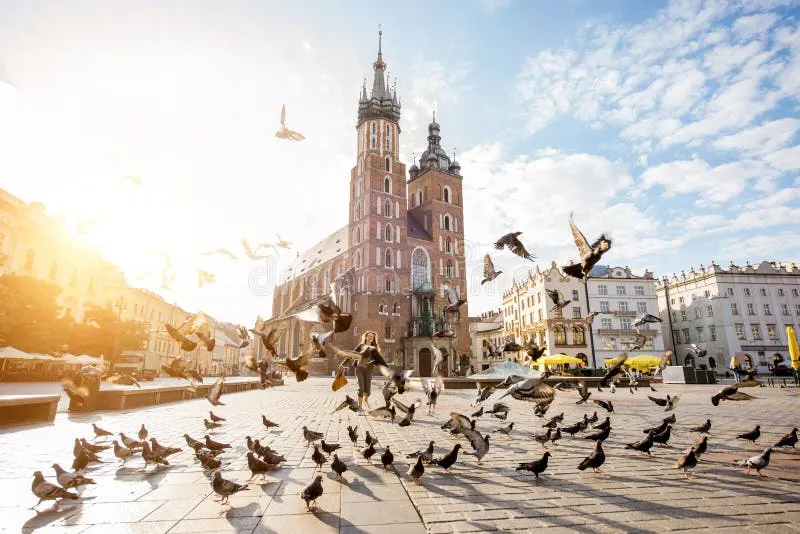
Yes, on several counts. The centre is compact and highly walkable: the Main Market Square (Rynek Glowny), St Mary's Basilica, the Cloth Hall and Wawel Castle all sit inside the Old Town, ringed by the Planty park, with Kazimierz a short walk south. The Main Market Square is one of the largest medieval town squares in Europe, and the Old Town is a UNESCO World Heritage Site, which is why the sights stay so concentrated and easy to reach on foot.
English is widely spoken across hostels, tours, restaurants and ride-hailing, so navigating alone is easy. Prices remain markedly lower than in most Western European capitals, and the social side is built in through tip-based walking tours, pub crawls and group day trips. For the sights in depth, see the Krakow guide.
Safety for solo travellers
Krakow is generally safe, and widely regarded as one of Central Europe's safer city breaks, with Poland at the lowest advisory tier (Level 1, normal precautions). That is a low-crime reputation, not a guarantee: violent crime against tourists is rare, but ordinary urban common sense still applies. (For honesty: UK and US advice flags avoiding areas within roughly 20 km of the Ukrainian and Belarusian borders, which is far from Krakow and does not affect a city visit.)
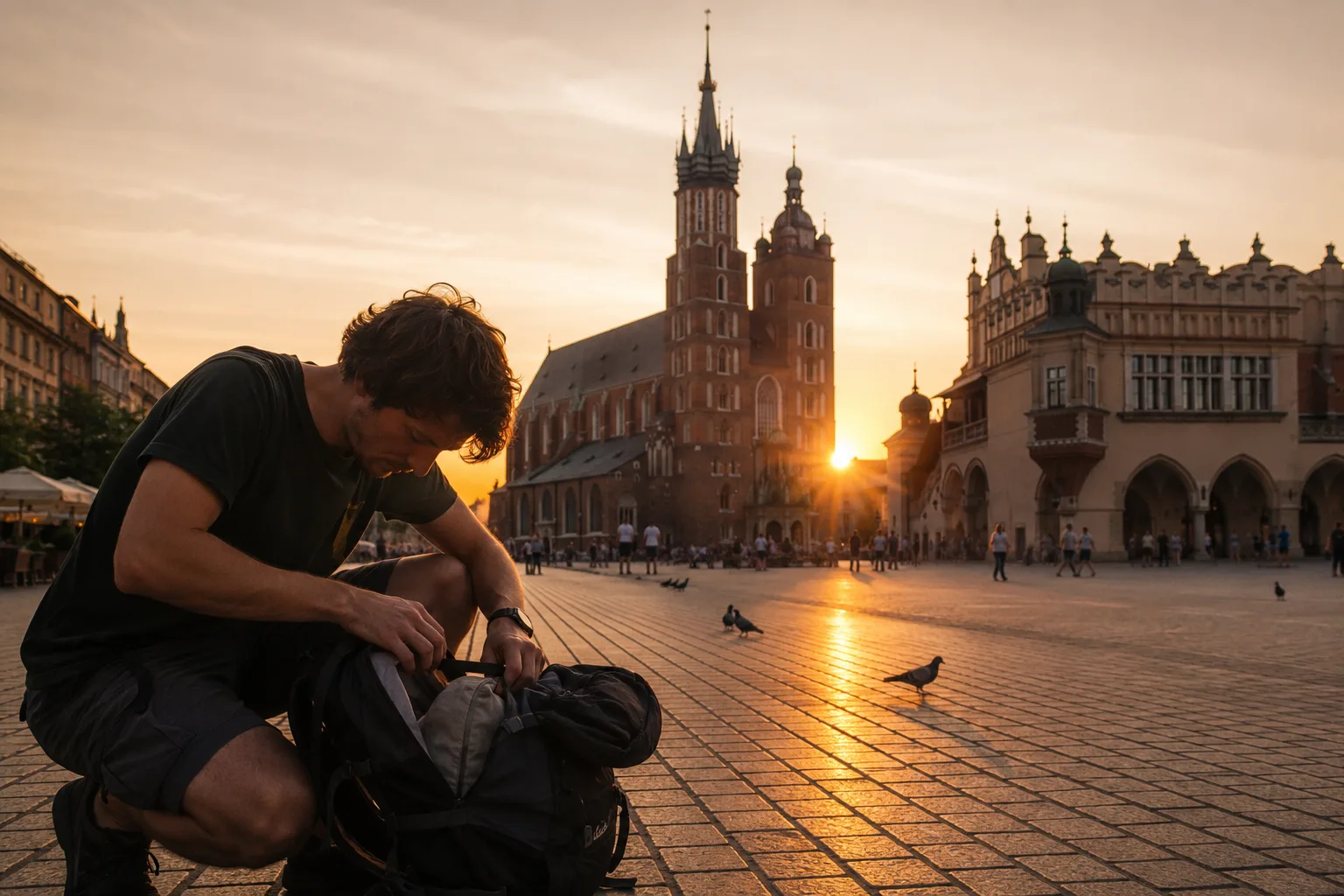
- Pickpocketing and petty theft, the main real risk, most likely in crowds (the Main Square area, St Mary's, busy trams) and around Krakow Glowny main station. Keep bags in front of you and do not leave your phone on cafe tables.
- Taxi overcharging. Unmetered taxis, especially at the station and airport, can overcharge tourists. Use ride-hailing apps (Bolt, Uber, Free Now) so the price is fixed before you get in.
- The club-promoter scam. Around the Main Square, promoters and friendly "strangers" lure tourists into strip clubs and bars with hidden charges and inflated tabs. Do not follow street promoters, and research venues first.
- Card currency conversion (DCC). When a machine offers to charge you in your home currency instead of zloty, it uses a rate roughly 5 to 15% worse than your bank's. Always choose PLN, and prefer bank-branded ATMs inside branches.
- Over-drinking. Cheap alcohol and a lively pub-crawl scene mean the most common trouble is losing track of belongings. Pace yourself, watch your drink, and keep enough for a Bolt home.
For police, ambulance or fire, dial 112 from any phone, including without a SIM. Krakow's tourist police speak English.
Solo female travellers
Solo female travellers consistently report Krakow as comfortable, with low reported street harassment, and several 2025 to 2026 solo-female roundups rate it highly. The central areas (the Old Town's east side and Kazimierz) stay well-lit and busy late. The usual precautions still apply: stick to lit, busy streets at night, use Bolt or Uber after nightlife, watch your drink, and trust your instincts. Reassuring, then, but not a blanket promise, and experiences vary.
Getting around solo
Most of the time you will walk: the Old Town, Wawel and Kazimierz are all within comfortable walking distance, so many solo visitors barely need transport for the core sights.
- Trams and buses (MPK). Trams are fastest across the centre. Tickets are time-based with unlimited transfers, for example around 6.00 PLN for a 60-minute single, with 24h, 48h and 72h passes at roughly 17, 26 and 36 PLN. These are indicative and change, so check current fares.
- Mobile tickets via Jakdojade. The app (in English) gives accurate live routes and in-app tickets, and is generally more reliable than Google Maps for Krakow transit.
- Airport train. From John Paul II Airport (Balice), the SKA1 train reaches Krakow Glowny in about 17 minutes. More detail in getting from the airport.
A rental car is unnecessary for a solo city visit. For day one, an electric cart tour of the Old Town is a low-effort way to get oriented and see a lot quickly before you set off on foot.
Where to stay by area
Base yourself by neighbourhood rather than chasing a specific property, and pick a hostel with a genuine common room or organised activities if the social side matters. There is a fuller breakdown in where to stay in Krakow.
Old Town (Stare Miasto)
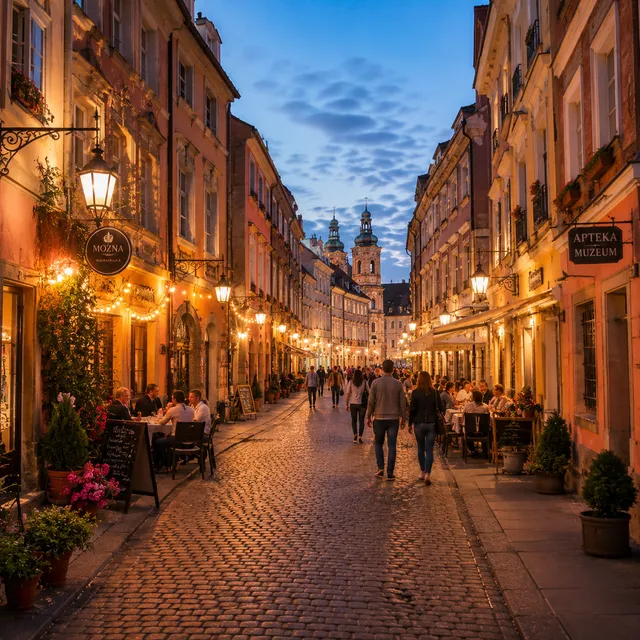
The most convenient base, within walking distance of nearly everything, well-lit and busy into the evening (the east side especially). Good for first-timers and for solo women who prefer bright, busy streets late. Pricier than other areas and noisier near the Square.
Kazimierz (former Jewish Quarter)
Often the best all-round solo pick: full of character, with plenty of hostels, independent cafes and bars, great food and a strong social scene, still an easy walk to the Old Town. The area for social travellers who want nightlife on the doorstep.
Podgorze
Quieter and typically a bit cheaper (dorms can run a few euros less), across the river from Kazimierz but still within reach of the centre. Good for budget travellers and anyone drawn to WWII history (Schindler's Factory, Ghetto Heroes Square). Less nightlife on the doorstep.
Meeting people
Company is easy to find here if you want it, and easy to skip if you do not.
- Free walking tours (tip-based), daily and in English (Old Town, Kazimierz and the Jewish Quarter, WWII, Nowa Huta), roughly 2 to 2.5 hours, meeting at central points like St Mary's Basilica.
- Group day trips. Organised small-group group day trips to Auschwitz-Birkenau, Wieliczka Salt Mine and Zakopane are easy to join solo and naturally sociable.
- Pub crawls, nightly and commonly meeting around the Main Square, taking in several Kazimierz and Old Town bars.
- Food and vodka tours and cooking classes, which let you eat well without a table-for-one feeling.
- Cafe culture and solo dining. Krakow is very cafe-friendly and eating alone is completely normal, from milk bars (bar mleczny) to Kazimierz cafes.
A light itinerary logic for 2 to 4 days
Structure a solo trip around walkable clusters plus one or two day trips, rather than a rigid hour-by-hour plan. Three days is a good minimum, four is comfortable for the city plus two day trips, and five or more suits a slower pace.
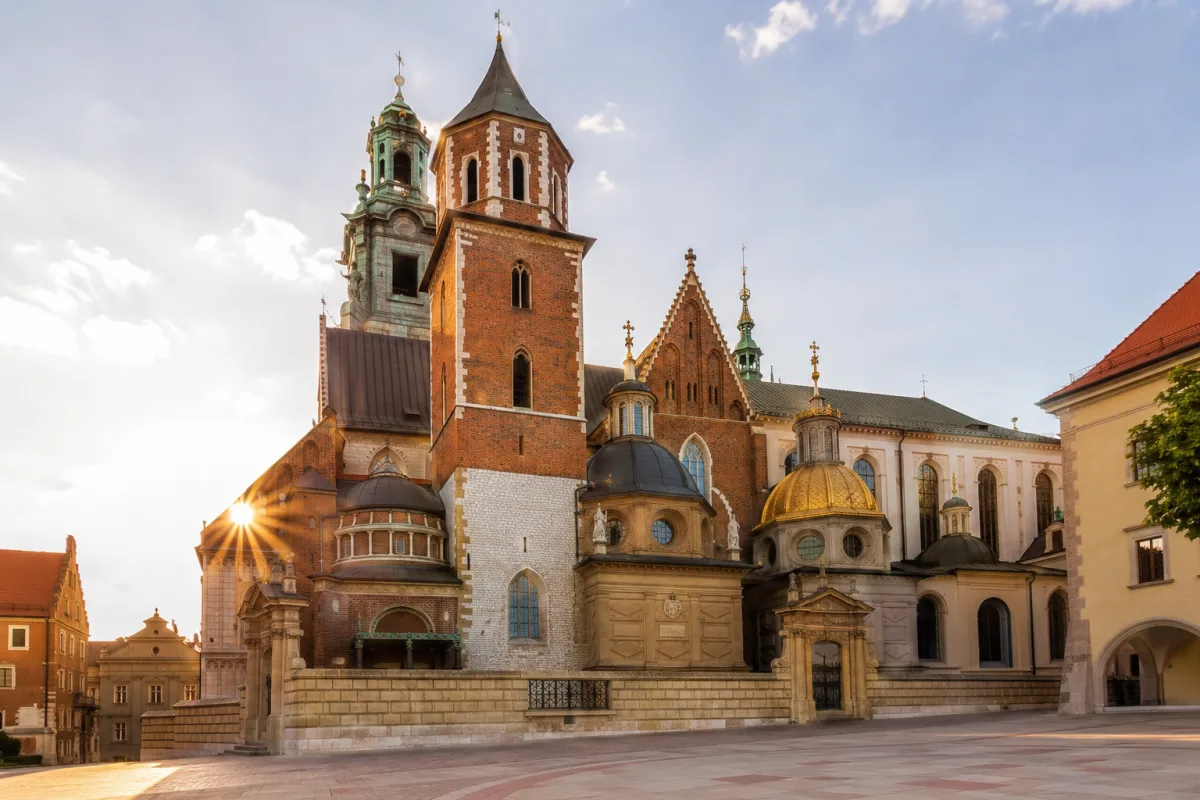
- Old Town and Wawel: one day on foot for the Main Square, Cloth Hall, St Mary's, Wawel Castle and Cathedral, and the Planty. Pair it with a morning walking tour to get oriented and meet people.
- Kazimierz: half a day to a full day for the former Jewish Quarter, cafes, street food, synagogues and street art, then stay into the evening for the bar scene.
- One big day trip: Auschwitz-Birkenau is heavy and needs around 7 hours, or combine it with Wieliczka Salt Mine. Zakopane and the Tatras is a longer outdoor option (around 11 hours) for a fourth day.
- One relaxed day: slow cafe mornings, Schindler's Factory and Podgorze history, a food tour, or simply wandering.
Budget (indicative)
The figures below are indicative 2025 to 2026 traveller estimates, not fixed prices, and they vary by season, area, exchange rate and personal style. Treat them as ranges, because prices change. There is a deeper breakdown in Krakow on a budget.
- Backpacker: roughly 35 to 55 EUR a day (about 150 to 235 PLN) for a dorm bed, milk-bar and street-food meals, a tram pass and one paid sight.
- Mid-range: roughly 80 to 130 EUR a day and up for a private room or 3-star hotel, sit-down meals, paid attractions and a guided day trip.
- Rough components: hostel dorm around 10 to 30 EUR a night (Podgorze tends cheapest); a standard hotel room around 80 to 120 USD; a full milk-bar meal roughly 5 to 10 EUR; pierogi around 3 to 5 EUR and a zapiekanka around 2 to 4 EUR; a single tram or bus ticket a few PLN, with a 72h pass around 36 PLN; guided full-day trips commonly under about 50 GBP.
Practical tips
- Currency is the zloty (PLN), not the euro. Cards are widely accepted, but carry some cash for milk bars, small vendors and tips.
- Always pay in PLN. Decline dynamic currency conversion on cards and ATMs, and use bank ATMs over standalone tourist-street machines.
- Tipping around 10% is standard in restaurants (5 to 10% common), ideally in cash. Saying "thank you" as you hand over payment can be read as "keep the change", so state the amount if you want change back.
- Tap water is drinkable. It meets EU standards, so bring a refillable bottle, and note that restaurants charge for water rather than serving it free.
- Stay connected with a SIM or eSIM to keep Jakdojade, Bolt and maps working. EU roaming covers Poland for many EU and UK plans.
- Use ride-hailing at night. Bolt, Uber and Free Now give fixed prices and a record of your ride, safer than a street taxi after dark.
- Tell someone your plans. Share your day-trip and nightlife plans with your hostel, a friend or family, and keep 112 saved.
Is Krakow safe for solo travellers?
Yes, broadly. Krakow is considered one of Central Europe's safer city breaks, and Poland sits at the lowest advisory tier (Level 1, normal precautions). Violent crime against tourists is rare; the real risks are petty theft in crowds and a few tourist-trap scams (taxi overcharging, strip-club drink scams, card currency conversion). Use normal city sense and you will most likely be fine. It is low-risk, not risk-free.
Is Krakow safe for solo female travellers?
Generally yes, and it is a popular solo-female destination, with several 2025 to 2026 roundups rating it highly and travellers reporting low street harassment. Central areas like the Old Town's east side and Kazimierz stay well-lit and busy late. Take the usual precautions: stick to lit, busy streets at night, use Bolt or Uber after nightlife, watch your drink, and trust your instincts.
Is Krakow good for solo travel?
Very. It is compact and walkable, English is widely spoken in tourism, it is affordable versus Western Europe, and a strong hostel, walking-tour and day-trip scene makes meeting people easy. Solo dining is normal thanks to milk bars and cafe culture.
How many days do you need in Krakow?
Three days is a good minimum, four is comfortable. That covers the Old Town and Wawel, Kazimierz, and one or two day trips (Auschwitz-Birkenau plus Wieliczka or Zakopane). Five or more if you want a slower pace or extra excursions.
Is it easy to meet people in Krakow as a solo traveller?
Yes. Tip-based free walking tours, nightly pub crawls, group day trips, food and vodka tours and social hostels in Kazimierz all make it straightforward to meet other travellers. A morning walking tour on day one is the classic ice-breaker.
Do they use euros in Krakow?
No. Poland uses the Polish zloty (PLN), not the euro. Cards are widely accepted, but carry some cash for milk bars, small vendors and tips, and always choose to be charged in zloty on cards and ATMs.
Do I need to speak Polish, or is English enough?
English is enough for a tourist visit. It is widely spoken in hostels, tours, restaurants and by ride-hailing drivers, and apps like Jakdojade and Bolt work in English. Learning "dzien dobry" (hello) and "dziekuje" (thank you) is appreciated but not required.
Do I need to rent a car?
No. The centre is walkable, trams and buses (via the Jakdojade app) are cheap and reliable, the airport train reaches the centre in about 17 minutes, and day trips are easily done on organised tours. A car is more hassle than help for a solo city visit.